
1. The Hidden Risk of Over-Treating a Stain
If you’ve ever stood over a sink scrubbing the same spot again and again, convinced that “one more try” will finally remove it, you’re not alone. Many people damage their clothes not because they don’t know how to remove stains, but because they don’t know when to stop treating a stain. The intention is good — save the garment, avoid waste, fix the problem — yet the result is often the opposite: weakened fibers, faded areas, rough texture, or fabric that simply doesn’t feel right anymore.
The biggest danger is subtle. Over-treatment doesn’t usually destroy fabric in one dramatic moment. It happens gradually. Each round of water, detergent, friction, and drying stress removes a little more structure from the fibers. At first, the fabric still looks fine. Then it starts to thin. Then it loses softness. Eventually, the stain may be lighter — but the damaged area becomes more noticeable than the original mark ever was. This is why understanding when to stop treating a stain is just as important as knowing how to treat it in the first place.
Another common trap is the belief that persistence equals effectiveness. In reality, stain removal works within limits. Once a stain has bonded deeply with the fiber — or once the fabric has absorbed too much mechanical and chemical stress — continuing to treat it no longer increases success. It only increases damage. At that point, the problem is no longer “the stain,” but the condition of the fabric itself.
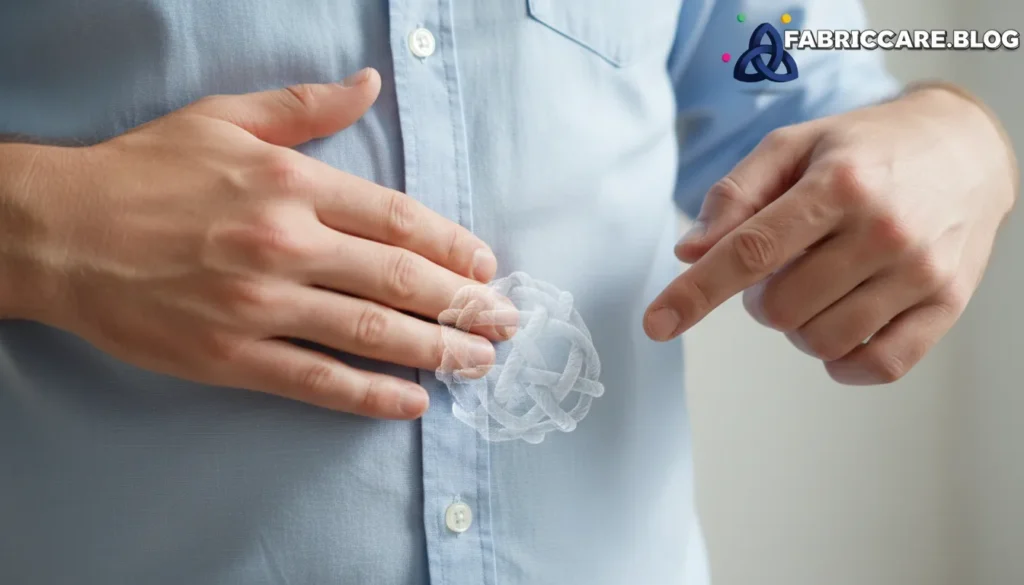
Many fabrics are far less resilient than they appear. Cotton can fray internally before you see holes. Synthetics can lose elasticity or develop shiny patches. Delicates can weaken to the point where the next wash causes tearing. Because these changes happen at the fiber level, they often go unnoticed until it’s too late. That’s why stopping at the right moment is a skill, not a failure.
There’s also an emotional factor involved. People feel invested once they’ve already spent time treating a stain. Walking away feels like giving up. But in fabric care, restraint protects value. Preserving the integrity of the garment often matters more than achieving a perfectly clean result. A faint stain on an otherwise healthy fabric is usually less noticeable — and far more wearable — than a visibly damaged area.
This article exists to reset that mindset. Instead of pushing until something breaks, you’ll learn how to recognize the point where continued treatment stops helping and starts harming. You’ll understand what’s happening inside the fibers, how to read early warning signs, and what smarter alternatives exist when further treatment is no longer the right move.
By the end, you won’t just know how to remove stains — you’ll know how to protect your clothes from the hidden damage that over-treatment causes, and make calm, confident decisions instead of emotional ones.

2. Why Repeated Stain Treatments Weaken Fabric Fibers
Every time you attempt to remove a stain, you’re applying some combination of water, cleaning agents, friction, and time. Individually, these actions seem harmless. Repeated together, they slowly break down the structure that holds fabric together. Understanding this process helps explain why knowing when to stop treating a stain is critical for preserving clothing.
Fabric is made of thousands of tiny fibers twisted and woven to create strength and flexibility. When you scrub a stained area, those fibers bend, rub against each other, and sometimes fray at the microscopic level. The first few treatments usually cause no visible change. But with each additional attempt, the fibers lose resilience. They don’t “bounce back” the way they did before.
Water plays a bigger role than most people realize. Wet fibers are weaker than dry ones. When fabric is saturated repeatedly, especially in warm or hot water, the fibers swell and become more vulnerable to damage. Add detergent or stain remover, and you introduce chemicals designed to break bonds — not just stain bonds, but fiber bonds as well if overused.
Friction accelerates this process dramatically. Scrubbing with a brush, rubbing fabric against itself, or twisting the area to “work the stain out” creates stress points. Over time, this leads to thinning, fuzziness, or shiny patches. In cotton, the fabric may feel rough or papery. In synthetics, the surface may flatten or become slick. These changes are permanent and often more noticeable than the original stain.
Drying between treatments adds another layer of damage. Heat sets both stains and stress. When a garment is dried — even air-dried — fibers contract. Repeating this cycle of wetting, scrubbing, and drying compounds fatigue in the fabric. This is why stains treated over multiple days often end in disappointment, even when you’re “doing everything right.”
The problem isn’t effort. It’s cumulative stress. Fabric doesn’t fail because of one wrong move; it fails because of many small, well-intended ones stacked together. Recognizing this helps shift the goal from “remove at all costs” to “remove without sacrificing the garment.”
Once you understand how repeated treatments weaken fibers, stopping becomes a rational decision, not a defeat. Preserving fabric integrity means accepting that some stains reach a point of diminishing returns. Knowing where that line is protects your clothes — and saves you time, frustration, and unnecessary wear.
3. How to Tell If a Stain Is Already “Set”
One of the most important skills in fabric care is learning how to recognize when a stain has moved beyond the stage where home treatment is effective. This is the point where continuing to scrub, soak, or reapply products stops helping and starts causing damage. Knowing when to stop treating a stain begins with understanding what a “set” stain really is.
A stain is considered “set” when its particles have bonded permanently with the fibers. This usually happens through heat, time, or repeated drying. Once this bond forms, the stain is no longer sitting on the surface of the fabric — it has become part of the fiber structure itself. At that stage, normal stain removal methods lose most of their effectiveness.
Visual cues are the first clue. Fresh stains often look darker when wet and lighter as they rinse out. Set stains tend to remain visible even when the fabric is saturated. If the color of the stain doesn’t change at all during treatment, that’s a warning sign. Another indicator is a halo effect: the surrounding area lightens or fades, but the center of the stain stays exactly the same. This suggests the fabric is reacting, not the stain.
Touch provides another layer of information. Run your fingers gently over the treated area once it’s dry. If the fabric feels thinner, rougher, stiffer, or less flexible than the surrounding material, the fibers have already been stressed. At this point, continuing treatment is more likely to worsen the texture than remove the mark.
Time also matters. Stains that have gone through multiple wash-and-dry cycles are far more likely to be set. Heat from dryers is especially aggressive. Even low heat can lock oils, dyes, and proteins into fibers. If a garment has already been dried after the stain appeared, expectations should be adjusted immediately.
A simple test can help confirm your suspicion. Wet the stained area with plain water and blot gently with a white cloth. If no color transfers at all and the stain’s appearance doesn’t shift, it’s likely set. This doesn’t mean the garment is ruined — it means the strategy must change.
Recognizing a set stain is not about giving up. It’s about protecting the fabric from unnecessary harm. Once you identify that a stain has reached this stage, the smartest move is often to stop active treatment and decide whether alternative approaches — masking, professional care, or acceptance — make more sense than further stress on the fibers.

4. Visual and Tactile Signs That Fabric Is Being Damaged
Stain removal often fails not because the stain is impossible, but because the fabric gives warning signs that go unnoticed. Learning to read these signs is essential for knowing when to stop treating a stain before the damage becomes irreversible. Fabrics communicate stress visually and through touch long before they tear or develop holes.
One of the earliest visual indicators is a change in surface texture. Look closely at the treated area under good light. If the fabric appears fuzzy, dull, or uneven compared to the surrounding material, the fibers are beginning to break down. In cotton and linen, this may show up as light pilling or a slightly “hairy” look. In synthetics, the opposite can happen — the surface may become overly smooth or shiny, especially where friction was applied.
Color distortion is another red flag. Over-treated areas may appear lighter, washed out, or patchy even if the stain itself remains. This happens when dyes are stripped from the fibers faster than the stain particles are removed. At that point, continuing treatment will only increase contrast between the damaged area and the rest of the garment.
Touch is just as important as sight. Gently pinch and rub the treated spot between your fingers. Healthy fabric feels consistent, flexible, and resilient. Damaged fabric often feels thin, papery, stiff, or oddly slick. If the area no longer behaves like the rest of the garment, the fibers have already lost integrity. No amount of additional cleaning will restore that structure.
Another subtle sign is how the fabric reacts when wet. If the treated area absorbs water faster, dries unevenly, or clings differently than the surrounding fabric, internal damage is likely present. This uneven behavior suggests the fiber network has been altered by repeated chemical or mechanical stress.
It’s also important to watch for shape distortion. Over-treatment can stretch or warp fibers, causing the area to lose its original form. This is especially common around seams, hems, or areas that were scrubbed while wet. Once the shape is compromised, further treatment increases the risk of tearing during future washes.
These signs are your stop signal. When you notice one or more of them, the decision is no longer about stain removal — it’s about fabric preservation. Pausing at this stage protects the garment from turning a minor cosmetic issue into permanent structural damage.
5. When Water, Detergent, and Friction Become the Problem
Most people assume that if a stain isn’t coming out, the solution is more of the same: more water, more detergent, more scrubbing. In reality, these three elements are often the reason fabric damage begins. Recognizing the moment when they stop helping is essential for understanding when to stop treating a stain.
Water weakens fibers, especially when they are wet repeatedly. Each time fabric becomes saturated, fibers swell and lose some of their natural strength. While this is temporary at first, repeated wetting without recovery time leads to fiber fatigue. Natural fibers like cotton and wool are particularly vulnerable, but synthetics are not immune — they can lose elasticity and surface integrity over time.
Detergent adds another layer of stress. Cleaning agents are designed to break bonds — oils, proteins, and dyes — but they don’t discriminate perfectly. When used repeatedly on the same spot, detergent can strip protective finishes, fade color, and dry out fibers. Concentrated stain removers intensify this effect, especially if they’re not fully rinsed between attempts.
Friction is often the most damaging factor. Scrubbing, rubbing fabric against itself, or using brushes creates mechanical stress that fibers cannot fully recover from. Even gentle friction becomes destructive when repeated in the same area. This is why the treated spot often looks worn or thin even when the stain fades only slightly.
The combination of these three elements multiplies the damage. Wet fibers are weaker, detergent reduces cohesion, and friction accelerates breakdown. Together, they turn a localized stain problem into a broader fabric issue. At this stage, continuing treatment rarely improves results and almost always worsens fabric condition.
A clear sign that water, detergent, and friction have become the problem is stagnation. If the stain no longer changes in appearance between treatments, but the fabric does, the balance has shifted. You’re no longer cleaning — you’re eroding.
Stopping here is a protective choice. Preserving the garment means recognizing that effectiveness has peaked. Further effort won’t remove the stain, but it will remove what makes the fabric wearable.

6. Common Stain Removal Habits That Cause Irreversible Damage
Many cases of fabric damage don’t come from one bad decision, but from small habits that feel logical in the moment. These routines are widely practiced, rarely questioned, and often repeated until the garment quietly deteriorates. Identifying these patterns helps clarify when to stop treating a stain before the damage becomes permanent.
One of the most common habits is escalating force. When a stain doesn’t respond immediately, people instinctively scrub harder, press longer, or switch to a rougher tool. What starts as gentle blotting turns into aggressive friction. This doesn’t make stains release faster — it simply accelerates fiber breakdown in a very specific spot, creating visible wear.
Another damaging habit is stacking products. It’s common to apply one stain remover after another without fully rinsing in between: detergent, then oxygen cleaner, then dish soap, then something “stronger.” Each product leaves residue, and together they overload the fabric with chemicals that weaken fibers and strip color. The stain may remain, but the fabric becomes brittle or faded.
Repeated drying between treatments is another quiet destroyer. People wash, dry, inspect, and repeat — not realizing that each drying cycle locks in both stain and stress. Heat contracts fibers, and when this happens repeatedly after treatment, the fabric loses flexibility and resilience. At that point, even successful stain removal would leave a damaged area behind.
Soaking for extended periods is also riskier than it appears. Long soaks weaken fibers, distort shape, and can cause dye bleeding, especially in mixed fabrics. What feels like a gentle, patient approach often does more harm than a single, controlled attempt.
Finally, there’s the habit of ignoring early warning signs. People notice thinning, stiffness, or color change and continue anyway, driven by the idea that stopping equals failure. In fabric care, that mindset is backwards. The real mistake is continuing after the fabric has clearly signaled distress.
Breaking these habits requires restraint, not skill. Recognizing that some stains reach a stopping point protects your clothes from becoming casualties of good intentions.
7. Decision Table: Treat Again or Stop Now?
At this point in the process, the reader has one clear need: make a decision without guessing. After several treatment attempts, uncertainty is what usually leads to over-treatment. This is where a structured decision table becomes useful — not to add information, but to organize judgment.
The goal of this table is simple: help you decide, calmly and quickly, whether another treatment attempt is reasonable or whether it’s time to stop and protect the fabric.
Before looking at the table, keep this in mind:
You are not deciding whether the stain is annoying. You are deciding whether the fabric can safely handle more stress.
Decision Table — Treat Again or Stop Now?
| Situation Observed | What It Means | Best Action | Common Mistake |
|---|---|---|---|
| Stain lightens with each attempt | Stain is still releasing from fibers | One more gentle treatment may help | Increasing friction too quickly |
| Stain unchanged, fabric unchanged | Stain may be set, fabric still stable | Pause and reassess strategy | Repeating the same method |
| Stain unchanged, fabric feels thinner or rough | Fibers are breaking down | Stop active treatment immediately | “Just one last try” |
| Area looks faded or shiny | Dye or surface damage has started | Stop and protect fabric | Switching to stronger products |
How to Use This Table in Practice
The pattern to look for is progress versus cost. As long as the stain changes and the fabric does not, another attempt can make sense — but only if it’s gentle and controlled. The moment the fabric starts changing while the stain does not, the decision is already made: continuing will cause visible damage.
Notice that none of the “stop” decisions mean the garment is ruined. They simply mean that this phase of treatment is over. At that point, the smartest move is to shift strategy rather than escalate effort.
This table also protects against emotional decision-making. When time and effort have already been invested, it’s easy to ignore warning signs. Using a clear decision framework removes that bias and replaces it with a practical rule:
If the fabric pays the price, the treatment has gone too far.
Once this decision is made, the next step isn’t more cleaning — it’s choosing a safer alternative, which is exactly what the next section covers.

8. A Simple Pause Test to Decide the Right Moment to Stop
One of the most effective ways to avoid fabric damage is also the simplest: stop and pause on purpose. The pause test is a short, low-effort checkpoint designed to help you decide when to stop treating a stain before over-treatment causes irreversible harm. It works because it removes urgency and replaces it with observation.
The test starts by stepping away. After a treatment attempt, do nothing for at least 30 minutes. Let the fabric rest, dry naturally, and return to its normal state. Many people make decisions while the fabric is still wet, when fibers are at their weakest and stains often look worse or misleading. Dry fabric tells the truth.
Once dry, examine the area under good light. Compare the treated spot directly with the surrounding fabric. Ask three simple questions:
Does the stain look different than it did before the last attempt?
Does the fabric look or feel different?
Is the difference positive or negative?
Next, use touch. Gently rub the treated area between your fingers and then do the same with an untouched section of the garment. If the treated spot feels thinner, stiffer, or less flexible, that’s a clear signal to stop. The pause test works because it highlights changes in the fabric that are easy to miss during active cleaning.
The final step is the water response check. Lightly dampen the area with plain water and blot with a white cloth. If nothing transfers and the stain’s appearance doesn’t shift at all, additional home treatment is unlikely to help. At this stage, the pause test confirms what your intuition may already suspect.
What makes this method powerful is its restraint. It creates a deliberate break between effort and decision. Instead of reacting emotionally to an imperfect result, you evaluate calmly. In many cases, people realize that the garment is already in acceptable condition — or that further treatment would cost more than it’s worth.
Using the pause test doesn’t mean abandoning care. It means choosing care that protects the fabric first. When in doubt, pausing is often the most responsible action you can take.
9. What to Do Instead of Continuing Treatment
Once you’ve reached the point where further stain treatment risks damaging the fabric, the question shifts from “How do I remove this?” to “What’s the smartest next move?” Stopping doesn’t mean doing nothing. It means choosing an alternative that protects the garment while keeping it usable. This is a key part of knowing when to stop treating a stain responsibly.
One option is stabilization. Rinse out any remaining cleaning product thoroughly and let the garment rest. Residual detergent or stain remover continues to stress fibers even after active treatment stops. A full rinse and gentle dry help reset the fabric and prevent delayed damage.
Another strategy is visual minimization. Light, evenly faded stains often become far less noticeable once the garment is worn. In some cases, washing the entire item gently can help blend the treated area so it doesn’t stand out. The goal is not to erase the stain completely, but to reduce contrast without targeting the spot again.
Placement also matters. Small stains in low-visibility areas — under arms, near hems, inside folds — often don’t justify aggressive treatment. Accepting a minor imperfection in exchange for fabric longevity is a practical tradeoff, not a failure.
Professional cleaning is another alternative, but only when chosen deliberately. A professional cleaner has access to solvents and controlled processes that home methods don’t offer. However, even professionals have limits. If the fabric is already weakened, additional intervention may still cause damage. Knowing when to stop at home helps ensure professional care has a better chance of success.
In some cases, repurposing is the smartest outcome. A stained but structurally sound garment can still serve as loungewear, work clothing, or layered apparel. Preserving usability extends the life of the item far more than forcing perfection.
The common thread in all these options is respect for the fabric. Once active treatment stops being productive, the best action is the one that maintains integrity, comfort, and function — even if the stain doesn’t disappear completely.
10. Fabric Types That Are Most Sensitive to Over-Treatment
Not all fabrics tolerate repeated stain removal efforts equally. Some materials show damage quickly, while others hide stress until failure happens suddenly. Understanding which fabrics are most vulnerable helps you decide when to stop treating a stain sooner — before visible damage appears.
Delicate natural fibers are among the most sensitive. Silk, wool, and linen have weaker fiber bonds and react strongly to moisture, heat, and friction. Silk loses luster and strength with minimal handling. Wool felts, stretches, and thins easily when wet and agitated. Linen fibers break down with repeated bending, leading to thinning that may not be obvious until the garment tears.
Blended fabrics also deserve caution. When natural and synthetic fibers are woven together, they often respond differently to treatment. One fiber may weaken faster, causing uneven texture or distortion. This mismatch can make damage appear suddenly, even if the fabric looked fine during earlier attempts.
Synthetics like polyester and nylon are often assumed to be durable, but they have their own vulnerabilities. Excessive friction can cause shiny patches, melted-looking areas, or loss of elasticity. Heat intensifies this risk. Once these changes occur, they cannot be reversed.
Knits and stretchy fabrics are especially prone to over-treatment damage. Their structure relies on loops rather than tight weaves, making them more susceptible to distortion and thinning when wet. Scrubbing or twisting a stained knit can permanently alter its shape.
To clarify risk levels, the table below summarizes how different fabric types respond to repeated stain treatment and when stopping is usually the safer choice.
Fabric Sensitivity Reference Table
| Fabric Type | Sensitivity Level | Common Damage Signs | When to Stop Early |
|---|---|---|---|
| Silk / Wool | Very High | Thinning, felting, loss of softness | After 1–2 gentle attempts |
| Linen | High | Fiber breakage, rough texture | When texture changes |
| Cotton | Medium | Fading, fuzziness | When thinning is felt |
| Synthetics | Medium | Shine, stiffness | When surface changes |
| Knits / Stretch | High | Distortion, loss of shape | At first sign of stretching |
How to Use This Information
This table isn’t meant to scare you away from stain treatment. It’s meant to adjust expectations. The more sensitive the fabric, the lower the tolerance for repeated attempts. For these materials, stopping early often preserves wearability far better than pushing for full stain removal.
Knowing the fabric type gives you permission to stop sooner — and that restraint is often what saves the garment.
11. Professional Cleaning: When It Makes Sense (and When It Doesn’t)
After several careful attempts at home, many people assume professional cleaning is the guaranteed next step. Sometimes it is. Sometimes it isn’t. Knowing when to stop treating a stain includes understanding when outside help adds value — and when it simply introduces more risk.
Professional cleaners have advantages home methods don’t: controlled solvents, specialized equipment, and experience with fiber behavior. For oil-based stains, dyes, or complex blends, this can make a real difference. If the fabric is still structurally sound and the stain hasn’t been aggressively worked, professional treatment may succeed where home care stalls.
Timing matters more than most people realize. The best moment to take a garment to a cleaner is before the fabric shows signs of stress. If the area already feels thin, stiff, shiny, or distorted, professional intervention may worsen the damage. Cleaners can remove stains, but they cannot rebuild weakened fibers. At that point, even a skilled process can push the fabric past its limit.
It’s also important to be realistic about outcomes. Professional cleaning does not guarantee complete stain removal. What it often offers is controlled risk. A good cleaner will assess the garment and, in some cases, recommend stopping rather than proceeding. That recommendation is a signal of expertise, not failure.
Communication plays a key role. Always explain what treatments have already been tried and how many times. This helps the cleaner choose a safer approach — or advise against further action. Omitting this information increases the chance of cumulative damage.
Finally, cost-benefit matters. For everyday garments, repeated professional attempts may not make sense. For high-quality or sentimental items, stopping home treatment early and consulting a professional can preserve both appearance and longevity.
Professional cleaning is not the “next level” of persistence. It’s a strategic option — best used selectively, and only while the fabric is still strong enough to benefit from it.
12. Final Rule of Thumb to Protect Clothes and Let Go Safely
The hardest part of stain removal is not the technique — it’s knowing when persistence stops being helpful. By now, one principle should be clear: the condition of the fabric matters more than the presence of the stain. Once that priority shifts, decisions become simpler, calmer, and far more effective.
A reliable rule of thumb is this:
If the stain is not changing, but the fabric is, it’s time to stop.
This rule cuts through doubt, frustration, and emotional investment. It reminds you that every garment has limits, and that crossing those limits in pursuit of perfection often leads to worse outcomes than accepting a small imperfection. Clothes are meant to be worn, not endlessly corrected.
Stopping at the right moment is an act of care, not neglect. It protects structure, texture, comfort, and lifespan. A slightly stained garment that still feels good, fits well, and holds its shape will always outperform a spotless one that looks worn, thin, or damaged.
Letting go also builds confidence. Instead of reacting impulsively, you learn to observe, evaluate, and decide. Over time, this reduces wasted effort, saves time, and prevents unnecessary loss. You stop fighting fabric behavior and start working with it.
This mindset applies beyond a single stain. It improves how you wash, dry, store, and maintain clothes overall. Knowing when to stop treating a stain is part of a broader skill: respecting materials and making practical decisions that preserve value.
In the end, fabric care isn’t about winning every battle. It’s about choosing the battles that are worth fighting — and walking away from the ones that aren’t.