1. Why Fresh vs Set-In Stains Require Different Decisions
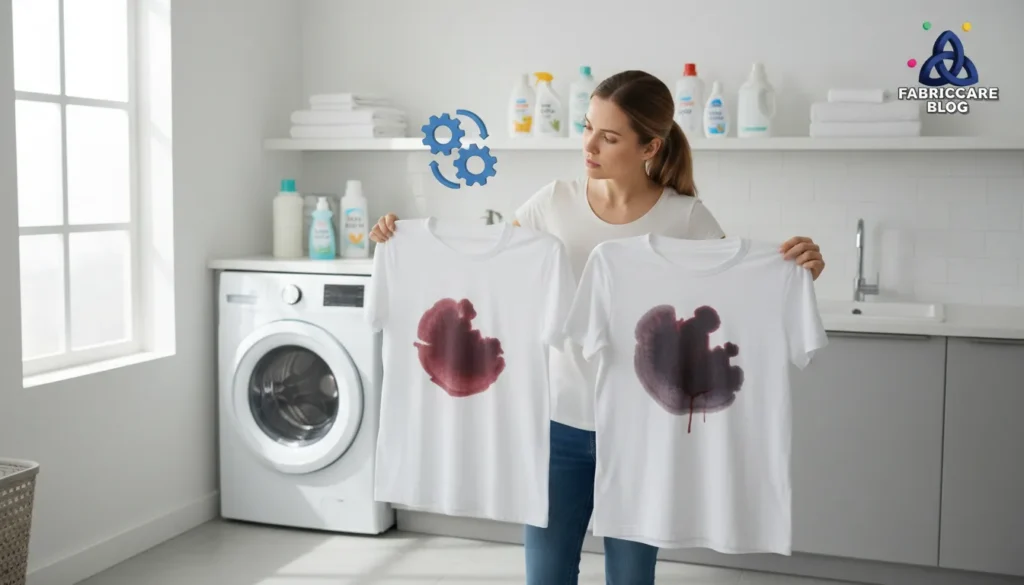
Fresh vs set-in stains are not two stages of the same problem — they are two different decision paths. Treating them as if they require the same response is one of the main reasons stains become permanent and fabrics get damaged unnecessarily. The difference is not subtle. It changes what works, what fails, and what should never be attempted.
A fresh stain is still negotiable. It sits closer to the surface of the fibers and has not fully bonded yet. At this stage, correct early decisions can dramatically reduce the stain with minimal stress on the fabric. A set-in stain, however, has already interacted with fibers through time, heat, or previous washing. Once this happens, the goal shifts from fast removal to controlled improvement and fabric preservation.
The mistake most people make is acting as if speed always helps. Rushing feels logical, but urgency often leads to heat, friction, or strong products being applied too early. These actions do not just fail to remove stains — they actively push stains deeper into fibers and weaken fabric structure at the same time. In practical terms, acting fast only helps when the action itself is correct.
Understanding fresh vs set-in stains is about risk management. Fresh stains allow cautious intervention. Set-in stains demand restraint. Confusing these two leads to over-treatment, repeated washing, and damage that cannot be undone.
Time is not the only factor. Heat plays a decisive role in turning fresh stains into set-in stains. A single cycle through a dryer or a hot wash can permanently bond proteins and dyes to fibers. Textile care research consistently shows that early heat exposure is one of the strongest predictors of permanent staining, especially for food, sweat, and bodily fluid stains.
Fresh vs set-in stain comparison
Why this table exists:
This table makes the decision difference visible so you can choose strategy instead of reacting emotionally.
| Stain State | Fiber Interaction | Primary Risk | Strategic Goal |
|---|---|---|---|
| Fresh stain | Surface-level | Overreaction | Reduce safely |
| Semi-dry stain | Partial bonding | Spreading | Loosen carefully |
| Set-in stain | Deep bonding | Fabric damage | Minimize harm |
| Unknown timing | Uncertain | Over-treatment | Preserve fabric |
How to use this table:
If you are unsure whether a stain is fresh or set-in, always treat it as set-in. This conservative choice protects the fabric and keeps options open.
The key insight is that fresh vs set-in stains require different mindsets, not just different products. Fresh stains reward patience and gentle control. Set-in stains punish aggression and reward restraint. Knowing which situation you are in prevents unnecessary damage and unrealistic expectations.
This distinction also reduces frustration. Many people keep escalating treatment on set-in stains, assuming effort equals progress. In reality, repeated attempts often weaken fabric without improving appearance. Accepting the limits of set-in stains early leads to better decisions and longer garment life.
The most practical takeaway is simple. Before touching a stain, ask one question: Is this fresh, set-in, or uncertain? That single question determines whether you move forward carefully or slow down to protect the fabric. Understanding this difference is the foundation of making smarter choices when dealing with fresh vs set-in stains.
2. What Turns a Fresh Stain Into a Set-In Stain
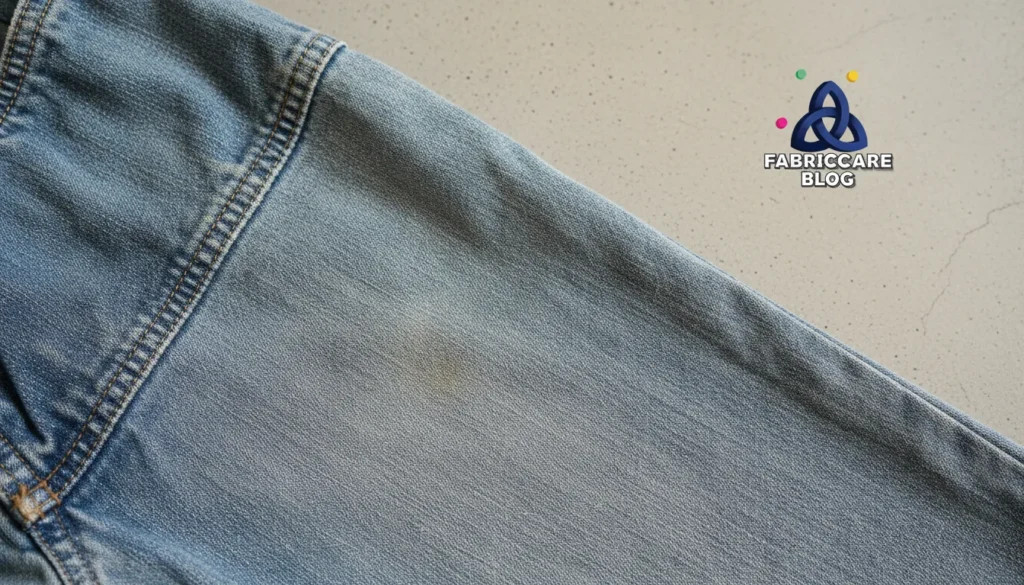
To manage fresh vs set-in stains correctly, you need to understand what actually turns a negotiable stain into a permanent one. Most stains do not become set simply because time passes. They become set because specific actions — often well-intended — change how the stain bonds with fabric fibers.
The first and most powerful factor is heat. Heat accelerates chemical reactions between the staining substance and the fibers. Proteins coagulate, dyes migrate and lock in place, and oils become harder to dissolve. A single exposure to hot water or a dryer can permanently convert a fresh stain into a set-in one, even if the stain looked minor beforehand. This is why garments that “look cleaner” after washing sometimes reveal stains only after drying — the damage has already been done.
The second factor is friction. Scrubbing or rubbing a wet stain forces particles deeper into the fiber structure. Wet fibers swell and lose strength, making them more vulnerable to abrasion. What feels like productive effort often spreads the stain and increases bonding instead of lifting it.
Chemicals play a role as well. Strong products applied too early can fix dyes or proteins into the fabric, especially when combined with heat. Over-application also leaves residues that attract dirt, making the stain appear to return later.
Finally, repetition seals the outcome. Each additional attempt compounds stress through moisture, agitation, chemicals, and temperature changes. Many stains become set not during the first mistake, but during the second or third “one more try.”
What causes stains to set
Why this table exists:
This table shows the exact actions that convert fresh stains into set-in stains so you can avoid them intentionally.
| Trigger | What It Does | Resulting Risk |
|---|---|---|
| Heat exposure | Accelerates bonding | Permanent setting |
| Aggressive rubbing | Pushes stain deeper | Fiber damage |
| Strong chemicals early | Fixes dyes/proteins | Color loss |
| Repeated attempts | Compounds stress | Irreversible wear |
How to use this table:
If more than one trigger has occurred, assume the stain is already set and shift your strategy to damage control.
The key insight is that stains rarely “decide” to become permanent on their own. They are made permanent by specific choices. Understanding what turns fresh stains into set-in stains gives you control back and helps you protect fabric before the point of no return.
3. How Time and Heat Change Stain Behavior
To manage fresh vs set-in stains correctly, you need to understand how time and heat change stain behavior at a fiber level. Many people assume time alone is the enemy, but time by itself is rarely what makes a stain permanent. The real accelerant is heat — and time simply increases the chance that heat will be introduced.
When a stain first occurs, most staining substances sit on or near the surface of the fibers. At this stage, the bonds between the stain and the fabric are weak and reversible. As time passes, moisture evaporates and residues concentrate, which makes removal slightly harder but still possible. The critical shift happens when heat enters the process, either intentionally or accidentally.
Heat increases molecular movement. Proteins denature and bind, dyes migrate and lock in place, and oils oxidize and thicken. Once this happens, stains stop behaving like removable contaminants and start behaving like part of the fabric itself. Textile care data consistently shows that a single exposure to heat can do more to set a stain than days of untreated time.
This is why stains often look manageable before washing and permanent after drying. The washing machine may loosen some residue, but the dryer completes the bonding process. In practical terms, heat finalizes what time only begins.
Time also affects decision-making. The longer a stain sits, the more likely people are to escalate treatment. That escalation usually introduces stronger products, higher temperatures, or repeated cycles — all of which increase damage risk. This is why restraint matters more as time passes, not less.
Time and heat impact overview
Why this table exists:
This table clarifies how time and heat interact so you can identify the true point of no return.
| Factor | What Changes | Impact on Removal | Risk Level |
|---|---|---|---|
| Short time, no heat | Weak bonding | High success | Low |
| Long time, no heat | Concentrated residue | Moderate success | Medium |
| Short time, with heat | Rapid bonding | Low success | High |
| Long time, with heat | Permanent fixation | Minimal success | Very high |
How to use this table:
If heat has already been applied, treat the stain as set-in regardless of how recent it seems. If no heat has been used, you still have options, even after time has passed.
The key takeaway is that heat matters more than time, and time mainly increases the likelihood of heat being applied. Recognizing this distinction helps you choose safer strategies, avoid false urgency, and protect fabric integrity when dealing with fresh vs set-in stains.
4. The Safest First Action for Fresh Stains
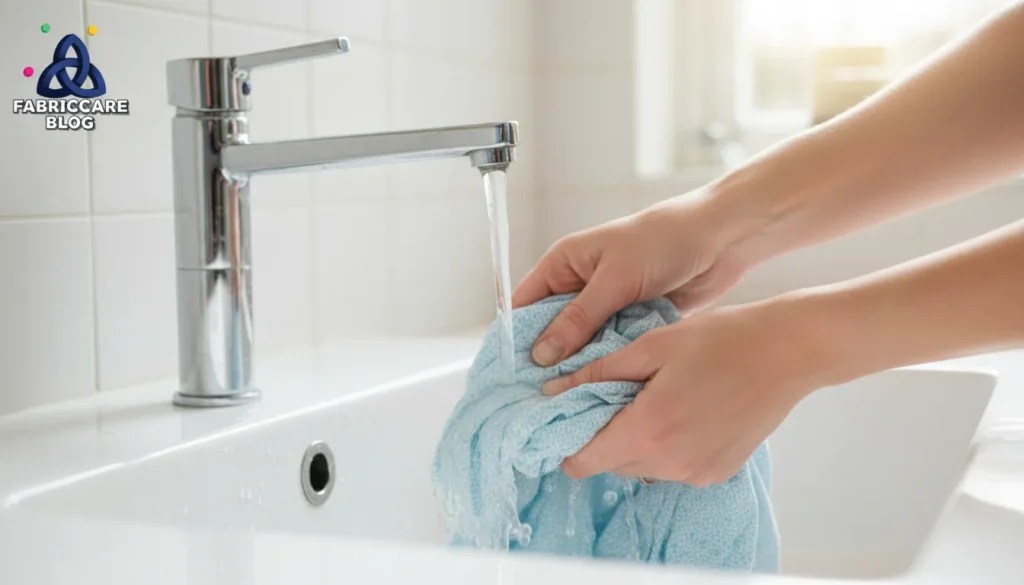
To handle fresh vs set-in stains correctly, you need a default first action that works even when you don’t know what caused the stain. Most fabric damage happens in the first few minutes, not because the stain was difficult, but because the initial response was wrong. The safest first action is designed to reduce risk, not to “fix everything” immediately.
A fresh stain has not fully bonded with the fibers yet, which means early decisions can preserve removal potential. The mistake most people make is confusing speed with effectiveness. Scrubbing, adding warm or hot water, or reaching for strong products feels productive, but these actions often push the stain deeper or set it permanently.
The safest first action for any fresh stain has three goals. First, contain the stain so it does not spread. Second, avoid heat and friction, which are the two fastest ways to lock stains into fibers. Third, preserve fabric structure, keeping options open for later treatment.
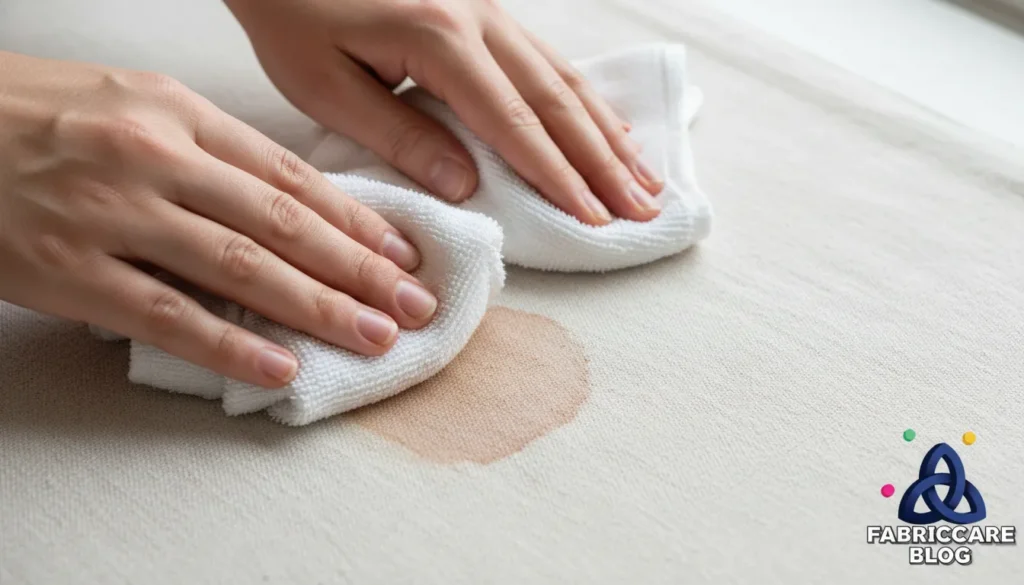
Containment means gentle blotting, not rubbing. Blotting lifts moisture and residue without forcing particles deeper into the fabric. For solid residues, careful scraping removes excess without smearing. At this stage, success is measured by stability, not by stain disappearance.
Heat must be completely excluded from the first response. Even warm water can trigger protein coagulation or dye migration. Textile care data consistently shows that early heat exposure dramatically reduces removal success and increases long-term fabric damage. In practice, no heat is always safer than the wrong heat.
Fresh-stain first-action table
Why this table exists:
This table provides a low-risk starting point you can apply immediately without knowing stain chemistry.
| Situation | First Safe Action | What to Avoid | Primary Goal |
|---|---|---|---|
| Wet spill | Gentle blotting | Rubbing | Prevent spread |
| Solid residue | Careful scraping | Pressing | Remove excess |
| Unknown stain | Blot with dry cloth | Heat | Buy time |
| Delicate fabric | Minimal handling | Products | Preserve fibers |
How to use this table:
Follow the first safe action exactly once. If the stain stabilizes, you can decide the next step calmly instead of reacting under pressure.
The key takeaway is that the safest first action is intentionally limited. It does not try to solve the stain; it protects the fabric. This restraint preserves removal options and prevents fresh stains from becoming set-in stains through avoidable mistakes.
5. What Actually Works on Set-In Stains
To deal with fresh vs set-in stains effectively, you need to accept a hard truth: once a stain is set, success is no longer about force or speed. It is about risk control and realistic improvement. Many garments are damaged because people apply fresh-stain logic to set-in stains, escalating treatment when restraint is required.
Set-in stains have already bonded with fabric fibers through time, heat, or previous washing. This bonding changes what “works.” Aggressive scrubbing, hot water, and strong chemicals rarely reverse the bond. Instead, they weaken fibers, strip color, and leave the fabric visibly worn. In practical terms, what works on set-in stains is not intensity, but precision and limits.
The first step is verification. Before any treatment, confirm whether heat has already been applied. If the garment has been washed and dried, the stain should be treated as high risk. At this stage, the goal shifts from full removal to controlled reduction without compromising fabric integrity.
Spot testing becomes essential. Testing a mild method in an inconspicuous area reveals how the fabric reacts before stress is applied to the stained zone. This step is often skipped, yet it prevents color loss, texture change, and fiber weakening that cannot be undone.
Another principle that works on set-in stains is single-variable treatment. One method, one product, one attempt. Stacking products or cycling through techniques compounds chemical and mechanical stress without improving results. If there is no visible improvement after a careful attempt, stopping is often the safest decision.
Set-in stain strategy table
Why this table exists:
This table shows what actually improves outcomes for set-in stains and what usually causes damage instead.
| Strategy | Why It Helps | What to Avoid | Realistic Outcome |
|---|---|---|---|
| Spot testing | Reveals fabric limits | Full application | Prevents damage |
| Mild, targeted treatment | Reduces stress | Aggressive methods | Partial fading |
| One attempt only | Limits cumulative damage | Repetition | Fabric preserved |
| Air-dry evaluation | Shows true result | Dryer | Honest assessment |
How to use this table:
If a strategy increases stress without visible improvement, stop. Preserving the fabric is a valid and often superior outcome.
The key takeaway is that set-in stains demand discipline, not persistence. What actually works is respecting fabric limits, accepting partial improvement, and knowing when preservation matters more than perfection. This mindset protects garments long after the stain itself has lost relevance.
6. When Cold Water Helps and When It Doesn’t
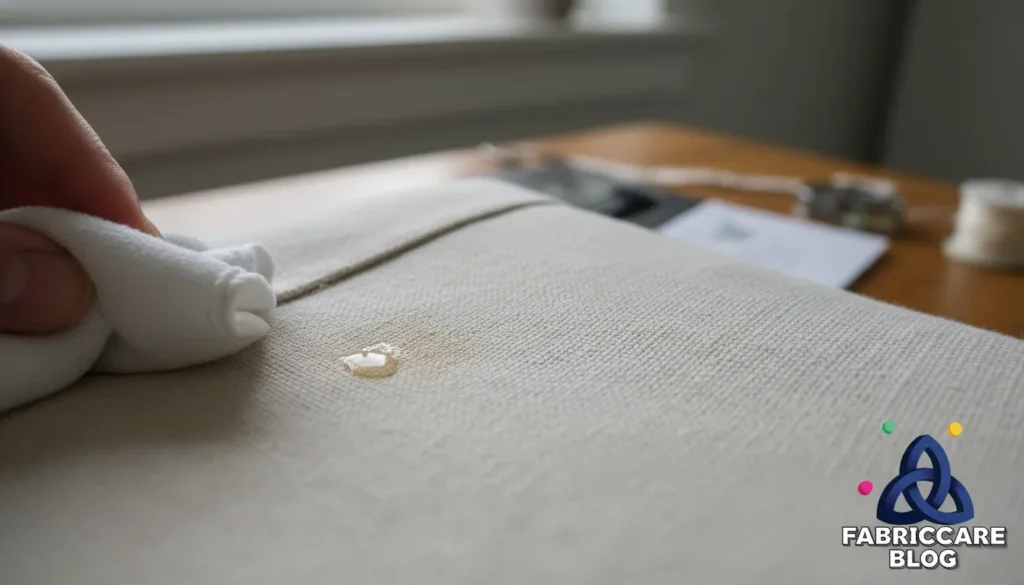
To handle fresh vs set-in stains correctly, you need to stop treating cold water as a universal solution. Cold water is often safer than warm or hot water, but safe does not mean sufficient. Knowing when cold water helps — and when it does nothing — prevents false confidence and repeated damage.
Cold water helps most when a stain is fresh and when heat-sensitive components are involved. Protein-based stains such as blood, sweat, dairy, and many food residues react poorly to heat. Cold water slows chemical bonding, keeps proteins from coagulating, and preserves fiber stability while you assess next steps. For dye-based stains, cold water reduces dye migration and limits spreading, buying time without locking color into the fibers.
However, cold water has limits. It does not dissolve oils effectively and does little for oxidized or fully set-in stains. When a stain has already been through heat — especially a dryer — cold water cannot reverse molecular bonding. At that point, repeated cold rinsing often gives the illusion of effort while quietly weakening fibers through excess moisture and handling.
Another misconception is that colder is always better. Extremely cold water can stiffen certain fibers and reduce the effectiveness of mild detergents or enzymes, especially when time-controlled action is needed. Cold water is a risk-reduction tool, not a cure.
Cold water decision table
Why this table exists:
This table clarifies when cold water is a strategic advantage and when it adds no real value.
| Stain Situation | Cold Water Helps | Main Limitation | Better Focus |
|---|---|---|---|
| Fresh protein stain | Yes | Needs follow-up | Contain and lift |
| Fresh dye stain | Yes | May spread | Blot carefully |
| Oil-based stain | No | Poor solubility | Absorb first |
| Set-in stain | Rarely | Bond already fixed | Spot test methods |
| Unknown stain | Yes (initially) | Not a solution | Buy time |
How to use this table:
Use cold water once as a stabilizing step. If there is no improvement, reassess instead of repeating the same action.
The key takeaway is that cold water is most effective before decisions are finalized, not after damage has already occurred. It protects options early, but it cannot undo heat, time, or bonding. Understanding this distinction helps you avoid false hope, reduce over-treatment, and make smarter choices when dealing with fresh vs set-in stains.
7. Products That Work Better on Fresh Stains
To manage fresh vs set-in stains effectively, it’s essential to understand that some products are most effective only while a stain is still fresh. Using the right product at the right moment can reduce a stain significantly with minimal stress on the fabric. Using the same product too late, however, often adds damage without improving results.
Fresh stains respond better because their bonds with fabric fibers are still weak. At this stage, mild products can interrupt those bonds before they strengthen. This is why early choices matter more than product strength. The goal is not to overpower the stain, but to interfere with it gently.
Enzyme-based products are a good example. When used promptly and kept away from heat, enzymes can break down proteins found in sweat, blood, and food residues. Their effectiveness drops sharply once heat is introduced or when stains dry and oxidize. Left too long or layered with other products, enzymes can weaken fibers instead of helping.
Mild liquid detergents also perform better on fresh stains. They lift and suspend soils when the stain has not yet bonded deeply. Using a small amount and rinsing thoroughly keeps chemical stress low while still providing cleaning action.
Another category that works best on fresh stains is absorbent materials rather than liquid products. Blotting with a clean cloth, paper towel, or absorbent powder can remove a surprising amount of residue before any chemistry is needed. This step reduces stain load and protects fibers from unnecessary treatment.
Fresh-stain product guide
Why this table exists:
This table helps you choose products that are effective early while minimizing fabric risk.
| Product Type | Works Best When | Key Limitation | Safer Use Tip |
|---|---|---|---|
| Enzyme remover | Stain is fresh | Heat-sensitive | Use cool, timed |
| Liquid detergent | Light fresh stains | Overuse risk | Minimal amount |
| Absorbent cloth | Wet spills | Limited removal | Blot, don’t rub |
| Absorbent powder | Greasy residue | Needs brushing | Apply dry first |
How to use this table:
If a stain is still fresh, start with the least aggressive option listed. Escalate only if improvement is visible and the fabric tolerates it.
The key takeaway is that products work best when they are matched to timing. Fresh stains reward early, gentle intervention. Once that window closes, switching to stronger products rarely improves outcomes and often increases damage.
8. Products That Are Safer for Set-In Stains
To deal with fresh vs set-in stains responsibly, you need to adjust product choice once a stain is no longer fresh. Set-in stains require a different mindset because the risk of fabric damage is higher and the chance of full removal is lower. At this stage, the safest products are those that allow controlled, limited action rather than aggressive intervention.
The biggest mistake people make with set-in stains is escalating product strength. Strong stain removers promise results, but when bonds are already fixed, these products often attack the fabric more than the stain. Color loss, texture changes, and fiber weakening are common outcomes. What works better is using mild products with predictable behavior, even if results are gradual.
Mild detergents are often the safest starting point. While they may not completely remove a set-in stain, they can sometimes reduce residue without stressing fibers. Their predictability makes them useful for cautious testing, especially on everyday fabrics. Oxygen-based products can also be useful in limited situations, but only when the fabric tolerates them and exposure time is strictly controlled. Overuse quickly leads to fading and fiber fatigue.
Another safer option for set-in stains is mechanical patience instead of chemical force. Gentle soaking in cool water, followed by air-drying for evaluation, allows you to assess progress without adding heat or friction. This process does not reverse bonding, but it prevents additional damage while giving mild methods time to work.
Spot testing becomes non-negotiable at this stage. Testing a product on an inconspicuous area reveals how the fabric reacts before stress is applied to the stained zone. This single step prevents irreversible mistakes and should be considered part of the product, not an optional extra.
Safer product choices for set-in stains
Why this table exists:
This table helps you choose products that minimize fabric risk when full removal is unlikely.
| Product Type | Why It’s Safer | Main Limitation | Best Use Case |
|---|---|---|---|
| Mild detergent | Predictable, low stress | Slow results | Initial testing |
| Oxygen-based product | Controlled brightening | Color fading | Colorfast fabrics |
| Cool water soak | No heat stress | Limited removal | Evaluation stage |
| Spot testing | Reveals tolerance | Takes time | All fabrics |
How to use this table:
If a product increases stress without visible improvement, stop immediately. Preserving fabric integrity is a valid success.
The key takeaway is that set-in stains respond best to restraint, not intensity. Safer products reduce the risk of damage and help you make informed decisions instead of chasing unrealistic outcomes.
9. Common Mistakes That Make Stains Permanent
To manage fresh vs set-in stains effectively, you need to recognize that most permanent stains are not the result of bad luck, but of predictable mistakes. These mistakes feel logical in the moment, yet they quietly lock stains into fabric fibers and reduce your chances of recovery.
One of the most damaging mistakes is using heat too early. Hot water, dryers, and irons accelerate bonding between stains and fibers. Protein-based stains are especially vulnerable. A single hot wash or drying cycle can turn a removable stain into a permanent one, even if it looked faint before. Heat finalizes what time only begins.
Another common mistake is scrubbing wet fabric. Wet fibers swell and lose strength, making them more susceptible to abrasion. Scrubbing pushes stain particles deeper while simultaneously breaking fiber structure. In practical terms, this removes fabric faster than it removes stains.
Product stacking is another frequent error. Applying multiple stain removers in sequence increases chemical stress without improving effectiveness. Combining products can fix dyes, strip color, or leave residues that attract dirt later. More chemistry rarely equals better results.
Rewashing and redrying stained items is the final mistake that seals many stains permanently. Each cycle adds heat, agitation, and chemical exposure. Fabric durability data shows that most irreversible damage occurs after repeated attempts, not after the first controlled one.
Mistakes that set stains permanently
Why this table exists:
This table highlights habits that consistently turn removable stains into permanent ones so they can be avoided intentionally.
| Mistake | Why It Fails | Long-Term Effect |
|---|---|---|
| Early heat use | Bonds stains to fibers | Permanent setting |
| Scrubbing wet fabric | Forces particles deeper | Fiber damage |
| Product stacking | Chemical overload | Color loss |
| Repeated washing | Compounds stress | Fabric failure |
How to use this table:
If your process includes more than one of these mistakes, stop immediately. Preserving the fabric is more important than continuing treatment.
The key takeaway is that stain permanence is usually created, not inevitable. By removing these common mistakes from your routine, you keep stains negotiable longer and protect fabric integrity when dealing with fresh vs set-in stains.
10. When to Stop Trying to Remove a Set-In Stain
To handle fresh vs set-in stains responsibly, you need to recognize when continued treatment becomes more harmful than helpful. Knowing when to stop is not giving up; it is a deliberate decision to protect the fabric once realistic improvement has plateaued. Many garments are ruined not by the stain itself, but by repeated attempts made after the fabric has reached its tolerance limit.
Set-in stains already involve strong bonding. Each additional attempt adds moisture, friction, chemicals, and often heat—compounding stress on fibers that are already compromised. Fabric care data consistently shows that irreversible damage most often appears after the second or third aggressive attempt, not after the first cautious one. At that point, even if the stain lightens slightly, the fabric may lose strength, texture, or color permanently.
Clear warning signs tell you it’s time to stop. Texture changes—such as roughness, thinning, stiffness, or loss of elasticity—indicate structural damage. Color distortion or halos suggest dye movement or loss. If the garment has been washed and dried since the stain appeared, the risk profile is already high, and continued treatment is unlikely to deliver proportional benefits.
Another trap is emotional escalation. When progress stalls, it’s tempting to try a stronger product or “one last wash.” This rarely improves outcomes and often finalizes damage. A faint stain on intact fabric is typically preferable to a garment that looks worn, faded, or misshapen.
Stop-or-continue decision guide
Why this table exists:
This table helps you replace emotion with criteria when deciding whether to proceed.
| Signal | What It Means | Safest Choice |
|---|---|---|
| Clear improvement | Fibers tolerating treatment | One more cautious try |
| No improvement | Bonds fixed | Stop |
| Texture change | Structural damage | Stop immediately |
| Color shift/halo | Dye loss | Stop |
| Washed & dried | High fixation risk | Avoid further treatment |
How to use this table:
If more than one “stop” signal applies, ending treatment protects the garment and prevents irreversible harm.
The key takeaway is that restraint preserves value. Stopping at the right moment keeps garments wearable and presentable long after the stain has lost importance. This decision-making skill is central to managing fresh vs set-in stains without sacrificing fabric integrity.
11. A Simple Decision Process for Any Stain
To manage fresh vs set-in stains consistently, you need a decision process you can follow under pressure. Most damage happens when people improvise. A simple, repeatable process replaces emotion with structure and keeps fabric protection at the center of every choice.
The first decision is classification. Before touching the stain, decide whether it is fresh, set-in, or uncertain. This single step prevents most mistakes. If timing is unclear, treat the stain as set-in. This conservative choice lowers risk and avoids early heat, friction, and product escalation.
The second decision is fabric tolerance. Identify whether the fabric is durable, sensitive, or delicate. Durable fabrics allow cautious escalation. Sensitive fabrics require limited attempts and strict heat control. Delicate fabrics demand restraint, spot testing, and acceptance that full removal may not be worth the risk.
The third decision is action scope. Separate containment from removal. Containment stabilizes the stain—blotting, scraping solids gently, and excluding heat. Removal is attempted only after containment succeeds and fabric limits are clear. Skipping containment is one of the fastest ways to spread stains and weaken fibers.
The fourth decision is escalation control. Use one method at a time, evaluate improvement, and stop if progress stalls. Repetition without improvement is not persistence; it is damage accumulation. A clear stop rule protects garments when expectations exceed reality.
Universal stain decision process
Why this table exists:
This table turns judgment into steps you can follow without guessing.
| Step | Question to Ask | Decision Outcome |
|---|---|---|
| Classify | Fresh, set-in, or unknown? | Choose risk level |
| Identify fabric | Durable, sensitive, delicate? | Set limits |
| Contain | Can I stabilize first? | Reduce spread |
| Treat | One method only | Evaluate effect |
| Stop or proceed | Is there improvement? | Protect fabric |
How to use this table:
Follow the steps in order. Skipping a step increases risk without improving results.
The key takeaway is that good outcomes come from decisions, not products. When you follow a simple process every time, you protect fabric by default and remove stains only when conditions are safe. This consistency is what makes managing fresh vs set-in stains reliable instead of stressful.

12. Building a Timing-Based Stain Removal Habit
To manage fresh vs set-in stains successfully over time, you need more than isolated techniques — you need a habit that is guided by timing, not urgency. Most fabric damage happens when people react emotionally to stains instead of following a consistent rhythm. A timing-based habit replaces panic with predictability.
The foundation of this habit is slowing down the first decision. Instead of acting immediately, pause to classify the stain as fresh, set-in, or uncertain. This pause prevents early heat use, aggressive scrubbing, and product overload — the three most common causes of permanent damage. When timing is unclear, treating the stain as set-in protects the fabric by default.
The next part of the habit is separating immediate containment from later removal. Containment happens right away and focuses on blotting, scraping solids gently, and keeping heat out. Removal happens only after containment succeeds and the fabric’s tolerance is understood. This separation reduces pressure and keeps early actions low-risk.
Another key habit is evaluation before escalation. After one controlled attempt, the garment should be air-dried and inspected. Air-drying reveals the true state of the stain without introducing heat. If improvement is visible, one more cautious attempt may be reasonable. If there is no change, the habit requires stopping. This rule prevents repeated cycles that quietly destroy fibers.
Consistency matters more than perfection. A timing-based habit does not promise complete stain removal every time. It promises fewer ruined garments, better fabric longevity, and calmer decisions. Over time, this habit reduces the number of stains that ever become set-in because early actions are safer and more intentional.
Timing-based habit overview
Why this table exists:
This table turns good intentions into a repeatable habit you can follow without stress.
| Habit Stage | What to Do | What It Prevents |
|---|---|---|
| Pause | Classify stain timing | Panic reactions |
| Contain | Blot, no heat | Early setting |
| Evaluate | Air-dry and inspect | False progress |
| Escalate carefully | One method only | Over-treatment |
| Stop | Accept limits | Fabric damage |
How to use this table:
Follow the habit in sequence every time. Overriding the order increases risk without improving outcomes.
The key takeaway is that timing, not effort, determines success. When stain removal becomes a habit guided by timing, you stop fighting stains and start protecting fabric — which is the most reliable way to manage fresh vs set-in stains without unnecessary damage.