1. Why Learning How to Remove Stains Without Damaging Fabric Matters
How to remove stains without damaging fabric is one of those skills most people only think about after something goes wrong. A favorite shirt shrinks, colors fade unevenly, or a stain disappears but leaves the fabric thin, rough, or misshapen. At that point, the stain is gone — but the garment is ruined.
This happens because most people are taught to focus on removal, not preservation. The unstated assumption is that if the stain disappears, the job was done correctly. In reality, stain removal has two equal goals:
- reduce or remove the stain, and
- keep the fabric structurally and visually intact.
When those two goals aren’t balanced, damage becomes inevitable.
The hidden cost of “successful” stain removal
Many common stain-removal habits create damage that isn’t immediately visible. Fibers weaken slowly. Colors lose depth over time. Fabrics become more prone to tearing, pilling, or stretching. By the time the damage is obvious, it’s already permanent.
Textile care studies consistently show that garments exposed to aggressive stain treatment routines can lose up to 30–40% of their tensile strength over time, even when stains appear to be removed successfully.
In practical terms, this means clothes fail sooner — not because they were cheap, but because they were over-treated.
Why most stain advice leads to damage
Generic stain advice usually follows a dangerous pattern:
- Act fast
- Scrub hard
- Use hot water
- Add stronger products if needed
Each of these steps feels logical. Together, they create the perfect conditions for fabric damage. Heat sets stains, friction breaks fibers, and chemical overload strips dyes and structure.
Learning how to remove stains without damaging fabric means replacing panic-driven reactions with controlled decisions.
Removal vs. preservation: a necessary shift
To understand why this matters, it helps to separate outcomes:
Why this table exists:
It shows how two different mindsets lead to very different long-term results.
| Approach | Short-Term Result | Long-Term Effect | Overall Outcome |
|---|---|---|---|
| Aggressive removal | Stain fades quickly | Fabric weakens | Garment ruined |
| Controlled removal | Stain reduces gradually | Fabric preserved | Garment lasts |
| Repeated treatment | Temporary improvement | Structural damage | Failure |
| Fabric-first strategy | Balanced result | Longevity | Best outcome |
How to use this information:
If a method prioritizes speed over fabric safety, it almost always trades short-term success for long-term loss.
The most common misunderstanding
Many people believe that fabric damage only happens when you “do something extreme.” In reality, damage is cumulative. Small stresses repeated over time are far more destructive than one isolated mistake.
Laundry behavior research suggests that a large percentage of fabric degradation comes not from wear, but from cleaning and stain treatment habits repeated week after week.
This means learning the right approach once protects every garment you own.
Point of virada — pause before you act
Before treating your next stain, stop for 10 seconds and ask:
- What fabric is this?
- What would be worse: a faint mark or damaged fabric?
- Is this stain fresh or already set?
This pause alone prevents most irreversible mistakes. It shifts you from reaction to intention — the foundation of safe stain care.
Why this satélite exists
This article exists to give you a clear, practical framework for stain removal that protects fabric instead of sacrificing it. The goal is not perfection. It’s durability, consistency, and confidence.
In the next section, we’ll break down what actually causes fabric damage during stain removal, so you can recognize risky actions before they cost you a garment.
2. What Actually Causes Fabric Damage During Stain Removal
To understand how to remove stains without damaging fabric, you need to understand what actually damages fabric in the first place. Most people blame products or washing machines, but the real causes are more basic — and far more controllable.
Fabric damage during stain removal almost always comes from four forces acting together: heat, friction, chemicals, and repetition. When these forces are applied without intention, even strong fabrics weaken quickly.
Heat: the fastest way to lock stains and damage fibers
Heat is often used too early and too aggressively. Hot water, dryers, and irons don’t just help stains “set” — they also stress fibers at a structural level.
Protein-based stains react especially poorly to heat. When exposed too soon, they bond tightly to fibers while the fibers themselves become more brittle. Textile research shows that heat exposure during improper stain treatment can reduce successful removal rates by over 50%, while accelerating long-term fabric wear.
Practical rule:
If a stain is still visible, heat should never be part of the process.
Friction: damage disguised as effort
Scrubbing feels like action, but friction is one of the most destructive forces in stain treatment. When fabric is wet, fibers swell and become more vulnerable. Rubbing at this stage causes micro-breaks that weaken the surface permanently.
Abrasion tests demonstrate that aggressive scrubbing on wet fabric can increase fiber damage by 30% or more, especially in lightweight cottons, knits, and blends.
In practice, the harder you scrub, the less fabric you’re left with.
Chemicals: too much of a good thing
Detergents, enzymes, and stain removers are tools — not solutions by themselves. Using too much product or combining multiple products increases chemical stress, strips dyes, and leaves residue that attracts future dirt.
Laundry care studies show that overuse of stain-treatment chemicals often leads to:
- Dull or faded color
- Rough texture
- Reduced elasticity
- Shortened garment lifespan
Key insight:
More product rarely equals better results. It usually equals more damage.
Repetition: the silent destroyer
One careful treatment attempt is usually safe. Repeating the same process over and over is not. Each cycle compounds stress, especially when combined with washing and drying.
Fabric durability data indicates that most irreversible damage occurs during the second or third aggressive attempt, not the first.
This is why knowing when to stop is just as important as knowing how to start.
Damage cause summary table
Why this table exists:
It makes the causes of fabric damage visible so you can avoid them intentionally.
| Damage Cause | Why It Happens | Safer Alternative |
|---|---|---|
| Early heat use | Sets stains, weakens fibers | Cold or no heat |
| Aggressive scrubbing | Breaks wet fibers | Gentle blotting |
| Product overload | Chemical stress | Minimal dosing |
| Repeated attempts | Cumulative damage | Evaluate and stop |
How to use this table:
If your method triggers more than one damage cause, the risk is already high.
The key takeaway
Fabric damage isn’t random, and it isn’t inevitable. It’s the result of predictable actions applied without restraint. Once you recognize these causes, stain removal becomes less stressful and far more successful.
In the next section, we’ll explore how fabric type changes stain-removal strategy, and why the same method can be safe for one garment and destructive for another.
3. How Fabric Type Changes Stain Removal Strategy
To understand how to remove stains without damaging fabric, you need to understand that fabric type changes the rules before the stain is even considered. Many stain-removal failures happen because people focus on what caused the stain while ignoring what the fabric can tolerate. This mismatch is one of the most common sources of irreversible fabric damage.
Fabrics respond differently to moisture, heat, friction, and chemicals because their fibers are built differently. A method that is safe for cotton can permanently distort silk or weaken wool. Treating all fabrics the same turns stain removal into trial and error, and fabric damage is the predictable outcome of that approach.
Natural fabrics such as cotton and linen absorb stains more easily, which often allows gentler treatments to work when applied early. However, these fibers weaken quickly with repeated friction or high heat. Wool behaves differently. When wet, wool fibers swell and can interlock, causing shrinkage and stiffness that cannot be reversed. Silk fibers lose strength when saturated and may show water marks even without chemicals. Synthetic fabrics resist absorption, but they are highly sensitive to heat and harsh products, which can cause glazing, melting, or permanent discoloration.
Fabric blends add another layer of risk. A blended garment behaves like the most fragile fiber in the mix, not the strongest one. This is why blended fabrics should always be treated more cautiously than they appear.
Fabric behavior comparison
Why this table exists:
Different fabrics fail in different ways. This comparison helps you decide how cautious you need to be before applying water, heat, or stain removers.
| Fabric Type | Main Sensitivity | Common Risk | Safer Approach |
|---|---|---|---|
| Cotton / Linen | Friction, heat | Fiber weakening | Gentle, limited treatment |
| Wool | Water, agitation | Shrinking, felting | Minimal moisture, no heat |
| Silk | Water, chemicals | Water marks, fading | Spot test, restraint |
| Synthetics | Heat, solvents | Melting, glazing | Low heat, mild products |
| Blends | Variable | Unpredictable damage | Treat as delicate |
How to use this table:
If a fabric appears in the high-risk column, your first move should always be gentler and slower, even if the stain seems minor.
The key takeaway is simple. Stain removal strategy should never start with the stain. It should start with the fabric. Once fabric limits are respected, stain removal becomes safer, more predictable, and far less destructive.
In the next section, we’ll look at fresh versus set-in stains and how this timing decision determines the safest first action.
4. Fresh vs. Set-In Stains: Choosing the Right First Action
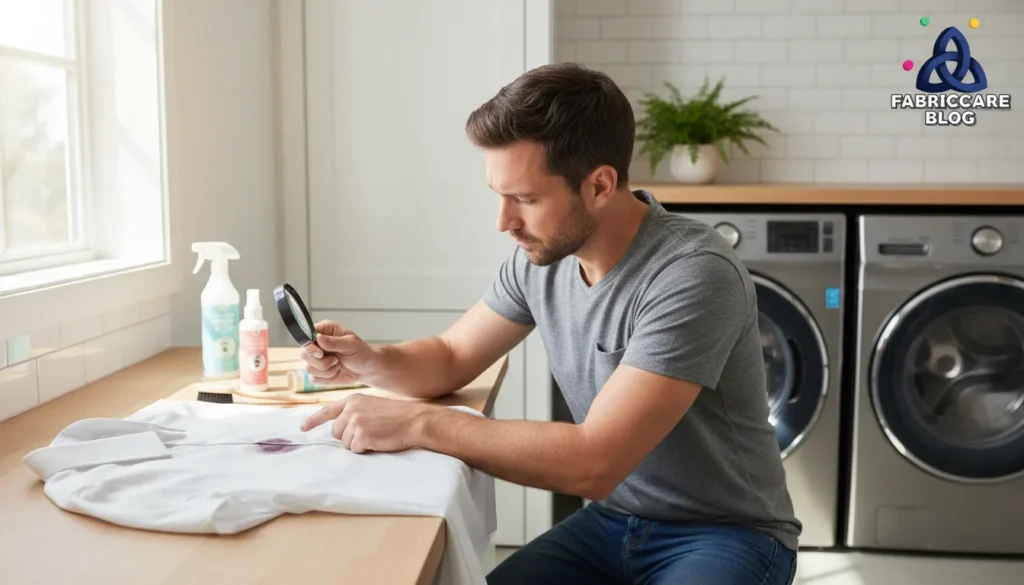
To understand how to remove stains without damaging fabric, you need to recognize that timing changes the entire strategy. Treating a fresh stain and treating a set-in stain are not variations of the same process — they are fundamentally different decisions. Confusing the two is one of the most common reasons stains become permanent and fabrics weaken unnecessarily.
A fresh stain has not fully bonded with the fabric fibers. It usually sits closer to the surface and can often be reduced significantly with minimal intervention if treated correctly. A set-in stain, however, has already interacted with the fibers through time, heat, or previous incorrect washing. At that point, the goal shifts from fast removal to controlled improvement and damage prevention.
The biggest mistake people make with fresh stains is acting emotionally. Scrubbing, adding hot water, or immediately applying strong products feels productive, but it often causes irreversible damage. Heat is especially dangerous. Protein-based stains such as sweat, blood, and food residues react aggressively to heat, bonding tightly to fibers while weakening their structure. Textile care data consistently shows that early heat exposure is one of the main reasons removable stains become permanent.
Set-in stains require a different mindset. Once heat or time has locked a stain into the fabric, aggressive attempts rarely succeed. Repeated washing, product cycling, and scrubbing usually cause thinning, fading, or texture damage without fully removing the stain. In practical terms, a faint stain is often a better outcome than a garment that has lost strength or shape.
Fresh vs. set-in stain decision table
Why this table exists:
This comparison helps you choose the safest first action based on stain timing instead of impulse.
| Stain Condition | First Safe Action | Main Risk | Strategic Goal |
|---|---|---|---|
| Fresh stain | Gentle blotting | Heat setting | Contain and lift |
| Semi-dry stain | Light cold control | Spreading | Loosen bonds |
| Set-in stain | Spot testing only | Fiber damage | Minimize harm |
| Unknown timing | Treat as set-in | Over-treatment | Preserve fabric |
How to use this table:
If you are unsure whether a stain is fresh or set-in, always default to the safer option. This conservative choice protects fabric and keeps options open.
The key takeaway is that timing does not just affect success — it defines risk. Acting fast helps only when the action is correct. Acting aggressively almost always works against fabric preservation.
In the next section, we’ll examine the safest first response to any stain, focusing on actions that reduce damage before removal even begins.
5. The Safest First Response to Any Stain
To understand how to remove stains without damaging fabric, you need a default first response that works even when you don’t yet know what caused the stain. Most fabric damage happens in the first few minutes, not because the stain was difficult, but because the initial reaction was wrong. A safe first response reduces risk before any product or method is chosen.
The problem is that most people treat the first response as the moment to “fix everything.” Scrubbing, adding hot water, or reaching for strong products feels efficient, but it often creates irreversible damage. The safest first response is not about removal — it is about control.
A safe first response has three goals. First, stop the stain from spreading. Second, avoid setting the stain through heat or friction. Third, preserve the fabric’s structure so later treatment remains possible. When these goals are met, removal success increases without sacrificing fabric health.
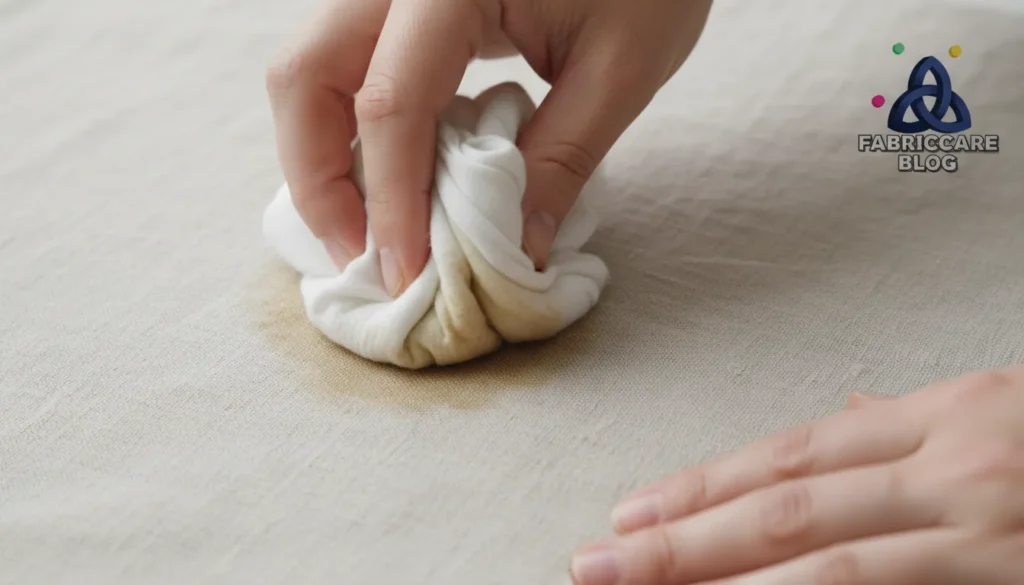
The most reliable first action for almost any stain is gentle containment. This means removing excess material without pushing it deeper into the fibers. Blotting absorbs moisture and residue while keeping friction low. Scraping solids carefully prevents smearing. Avoiding heat keeps proteins and dyes from bonding permanently.
Heat is the biggest threat at this stage. Even warm water can set protein-based stains or activate dyes before you understand what you are dealing with. Textile care data consistently shows that early heat exposure is one of the main reasons stains become permanent. In practice, no heat is always safer than the wrong heat.
Safe first-response decision table
Why this table exists:
This table gives you a single, low-risk starting point before choosing a specific treatment method.
| Situation | First Safe Action | What to Avoid | Primary Goal |
|---|---|---|---|
| Unknown stain | Gentle blotting | Heat, scrubbing | Contain stain |
| Wet spill | Blot from outside in | Rubbing | Prevent spread |
| Solid residue | Careful scraping | Pressing | Remove excess |
| Any fabric | No heat | Dryer, hot water | Preserve options |
How to use this table:
If you are unsure what to do, follow the first safe action. You can always escalate later, but you cannot undo early damage.
The key takeaway is that the safest first response is intentionally limited. It buys you time and protects the fabric while you decide the next step. This restraint is a core skill in how to remove stains without damaging fabric, because it prevents small mistakes from becoming permanent losses.
In the next section, we’ll look at water temperature and fabric safety, and why choosing cold, warm, or hot water is a decision that should never be automatic.
6. Water Temperature and Fabric Safety
To understand how to remove stains without damaging fabric, you need to treat water temperature as a decision, not a habit. Many people assume hotter water cleans better, but temperature is one of the fastest ways to set stains permanently and weaken fibers at the same time. Choosing the wrong temperature early often does more damage than the stain itself.
Water temperature affects stains and fabric in two ways. First, heat accelerates chemical reactions, which can cause stains—especially protein- and dye-based ones—to bond tightly to fibers. Second, heat changes fiber structure. Some fibers swell, others weaken, and some synthetic fibers deform or glaze. Once this happens, damage cannot be reversed.
Cold water is the safest starting point for most situations. It slows chemical bonding, protects dyes, and keeps fibers more stable while you assess the stain. Protein-based stains such as sweat, blood, dairy, and many food residues react especially poorly to heat. When exposed too early, proteins coagulate and lock into the fabric. Textile care research shows that early heat exposure can reduce removal success by more than 50 percent while increasing long-term fabric wear.
Warm water can be useful, but only after risk has been reduced. Once a stain has faded and you are confident the fabric tolerates warmth, warm water may help dissolve oily residues or remaining soils. Hot water, however, should only be used when no visible stain remains and the fabric is known to tolerate high temperatures. Using hot water on an active stain is one of the most common causes of permanent damage.
Water temperature decision table
Why this table exists:
This table helps you choose water temperature based on risk, not habit.
| Stain Type | Safest Starting Temp | When to Increase | Main Risk |
|---|---|---|---|
| Protein-based | Cold | After stain fades | Heat setting |
| Oil-based | Cold | Carefully to warm | Spreading |
| Dye-based | Cold | Rarely | Permanent bonding |
| Unknown | Cold | Only if safe | Irreversible damage |
How to use this table:
Always begin at the lowest-risk temperature. Increase only when the stain has clearly improved and the fabric allows it.
The key takeaway is simple. Water temperature should never be automatic. Cold water preserves options, warm water requires confirmation, and hot water should come last—if at all. Treating temperature as a controlled variable is a foundational rule of how to remove stains without damaging fabric, because it protects both color and structure before damage occurs.
7. Detergents, Enzymes, and Products: What to Use and What to Avoid
To understand how to remove stains without damaging fabric, you need to stop treating products as solutions and start treating them as tools with limits. Many garments are damaged not because the wrong product was used, but because too many products were used, used too aggressively, or used without understanding what they actually do.
Detergents, enzymes, and stain removers work in different ways. Detergents are designed to lift and suspend general soil during washing, not aggressively break down stains on their own. Enzymes target specific stain components, such as proteins or fats, but they are sensitive to heat and overexposure. Strong stain removers act quickly but can stress fibers and dyes if misused. Confusing these roles is one of the most common causes of fabric damage.
A frequent mistake is believing that stronger products equal better results. In reality, chemical overload strips dyes, roughens fiber surfaces, and leaves residues that attract future dirt. Laundry care studies consistently show that excessive product use shortens fabric lifespan and reduces visual quality even when stains appear to be removed.
Enzymes deserve special attention because they are often misunderstood. Enzyme-based products can be highly effective when matched correctly to the stain type, especially protein-based stains. However, they lose effectiveness when exposed to heat and can weaken fibers if left to work too long. Using enzymes without controlling temperature or time often creates more harm than benefit.
The safest approach is to use the least aggressive product that can reasonably work, then reassess before escalating. One product at a time, fully rinsed between attempts, protects both fabric structure and color.
Product selection decision table
Why this table exists:
This table helps you choose products based on function and risk instead of marketing claims.
| Product Type | Best Use Case | What to Avoid | Safer Approach |
|---|---|---|---|
| Liquid detergent | Light soil, final wash | Overdosing | Minimal amount |
| Enzyme remover | Protein-based stains | Heat exposure | Cool, timed use |
| Oxygen booster | Color-safe brightening | Delicates | Occasional use |
| Strong remover | Stubborn stains | Repeated attempts | Spot test only |
How to use this table:
If a product increases chemical stress without clear improvement, stop and reassess instead of switching to something stronger.
The key takeaway is that products should support your strategy, not replace it. When detergents and enzymes are used with intention and restraint, they improve outcomes. When used emotionally or excessively, they become one of the main reasons stain removal damages fabric instead of preserving it.
8. How to Treat Common Stains Without Weakening Fabric
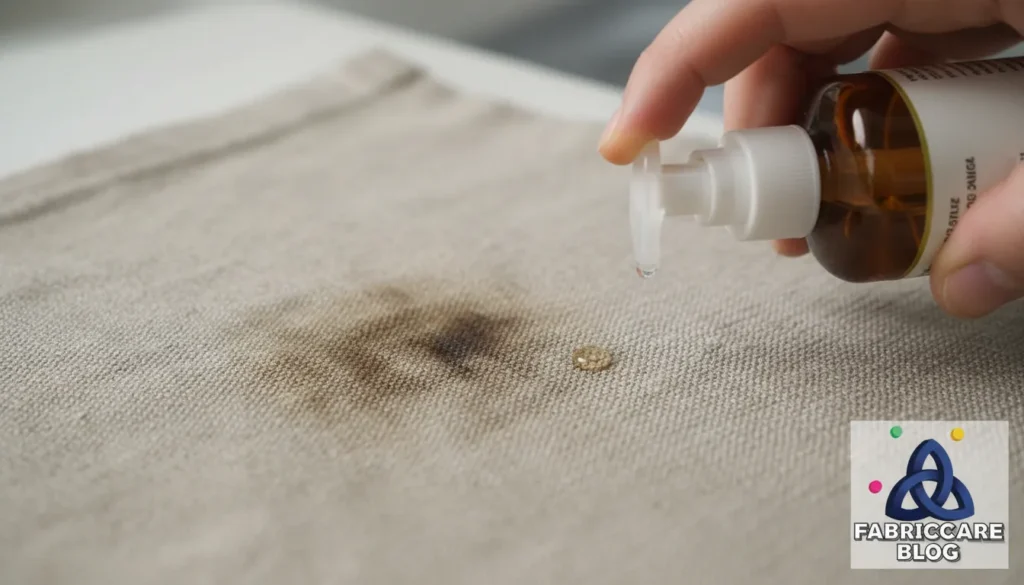
To understand how to remove stains without damaging fabric, you need to recognize that most everyday stains are mixed stains, not single problems. Food, drinks, sweat, and household messes usually combine oils, proteins, sugars, or dyes. Treating only one component while ignoring the others is why stains often fade temporarily and then reappear — or why fabric weakens even when the stain seems gone.
The mistake most people make with common stains is jumping straight to washing. Washing introduces heat, agitation, and chemicals all at once, which multiplies risk. Safe stain treatment starts before the washing machine is involved and focuses on reducing the stain while protecting fiber structure.
Food and beverage stains illustrate this clearly. Many contain protein and dye together. Applying heat too early can set the protein, while aggressive scrubbing spreads the dye. Sweat stains behave similarly. Although they look harmless, they contain proteins and salts that react poorly to heat and strong products. Oil-based stains require absorption first; water alone often spreads them deeper into the fabric.
The safest strategy is to treat common stains in stages. First, remove excess material gently without rubbing. Second, control moisture and temperature to avoid setting. Third, apply the mildest effective method and reassess before escalating. This staged approach reduces damage while keeping removal options open.
Common stain treatment overview
Why this table exists:
This table helps you choose a low-risk first strategy based on stain behavior instead of reacting impulsively.
| Stain Type | First Safe Action | Main Risk | Strategic Focus |
|---|---|---|---|
| Food sauces | Blot, cold control | Heat setting | Contain proteins |
| Beverages | Immediate blotting | Dye bonding | Prevent spread |
| Sweat | Cool rinse | Heat reaction | Preserve fibers |
| Oils/grease | Dry absorption | Smearing | Lift before washing |
| Unknown | Gentle blotting | Over-treatment | Buy time |
How to use this table:
Start with the action that minimizes irreversible damage. Escalate only if the stain improves and the fabric tolerates it.
The key takeaway is that common stains are rarely emergencies. Rushing usually causes more harm than delay. Treating stains in controlled steps protects fabric strength and color, which is the real goal of how to remove stains without damaging fabric.
In the next section, we’ll look at the most common mistakes that damage clothes, and why avoiding them often matters more than choosing the “right” method.
9. The Most Common Mistakes That Damage Clothes
To understand how to remove stains without damaging fabric, you need to recognize that most fabric damage does not come from difficult stains, but from predictable mistakes repeated over time. These mistakes feel logical in the moment, yet they quietly weaken fibers, fade colors, and shorten garment lifespan.
One of the most damaging mistakes is scrubbing. Scrubbing creates friction at the exact moment when fabric fibers are most vulnerable—when they are wet. Wet fibers swell, lose strength, and break more easily. Abrasion testing consistently shows that aggressive scrubbing can increase fiber damage by more than 30 percent, especially on lightweight cottons, knits, and blends. In practice, scrubbing often removes part of the fabric instead of the stain.
Another common mistake is using heat too early. Hot water, dryers, and irons are often applied before the stain is fully removed. Heat does not just set stains; it also accelerates fiber degradation. Protein-based stains are especially sensitive, bonding permanently when heat is introduced too soon. Once heat has been applied, both stain and damage become much harder to reverse.
Product overload is another frequent error. Using too much detergent, stacking multiple stain removers, or switching products repeatedly increases chemical stress. This strips dyes, roughens fabric surfaces, and leaves residues that attract future dirt. More product rarely improves results. It usually increases long-term damage.
Repetition is the final and most overlooked mistake. One careful treatment attempt is usually safe. Repeating the same process multiple times compounds stress through moisture, friction, chemicals, and washing cycles. Fabric durability data shows that most irreversible damage occurs during the second or third aggressive attempt, not the first.
Common stain-removal mistakes table
Why this table exists:
This table makes damaging habits visible so they can be replaced with safer alternatives.
| Common Mistake | Why It Causes Damage | Safer Alternative |
|---|---|---|
| Scrubbing hard | Breaks wet fibers | Gentle blotting |
| Early heat use | Sets stains, weakens fibers | Cold control first |
| Too much product | Chemical stress | Minimal dosing |
| Repeated attempts | Cumulative damage | Reassess and stop |
How to use this table:
If your method includes more than one mistake listed above, the risk of fabric damage is already high.
The key takeaway is that effective stain care is often about what you avoid, not what you add. Removing these common mistakes from your routine immediately improves outcomes and protects fabric strength, which is essential for learning how to remove stains without damaging fabric.
10. When to Stop Treating a Stain to Avoid Permanent Damage
To understand how to remove stains without damaging fabric, you also need to know when to stop. This is one of the most difficult decisions for most people, because effort feels like progress. In reality, many garments are ruined not by the original stain, but by repeated attempts to “fix” it after the fabric has already reached its limit.
Fabric damage increases exponentially with repetition. Each treatment adds moisture, friction, chemicals, and often heat. While a single, careful attempt is usually safe, the second and third attempts compound stress and dramatically increase the risk of thinning, fading, distortion, or tearing. Fabric durability data consistently shows that most irreversible damage occurs after repeated aggressive treatments, not after the first controlled one.
A common trap is chasing perfection. When a stain fades but does not disappear completely, people often assume one more attempt will solve the problem. Instead, that extra attempt frequently weakens the fabric without significantly improving appearance. In practical terms, a faint stain is often a better outcome than a garment that has lost strength, shape, or color.
Another warning sign is change in fabric behavior. If the fabric begins to feel rougher, thinner, stiffer, or less elastic, these are signals that structural damage is already occurring. Continuing treatment at this point almost guarantees permanent harm, even if the stain eventually lightens.
Stop-or-continue decision table
Why this table exists:
This table helps you make an objective decision instead of an emotional one.
| Observation | What It Means | Safest Decision |
|---|---|---|
| Stain clearly fading | Treatment is working | One more cautious attempt |
| No visible improvement | Fibers are saturated | Stop immediately |
| Texture change | Structural damage | Stop |
| Color distortion | Dye loss | Stop |
| Fabric washed and dried | Stain likely set | Avoid further treatment |
How to use this table:
If more than one “stop” condition applies, ending treatment is the safest choice.
The key takeaway is that stopping early preserves options. Once fibers are damaged, no product can restore them. Knowing when to stop is a core skill in how to remove stains without damaging fabric, because restraint protects the garment long after the stain is forgotten.
In the next section, we’ll focus on simple habits that protect fabric during stain removal, so damage is prevented before treatment even becomes necessary.
11. Simple Habits That Protect Fabric During Stain Removal
To understand how to remove stains without damaging fabric, you need to look beyond techniques and focus on habits. Most fabric damage does not come from one bad decision, but from small, repeated choices made automatically. Changing a few everyday habits reduces the need for aggressive stain treatment and protects fabric long before damage begins.
One of the most protective habits is slowing down the first response. Rushing creates mistakes: heat applied too early, friction added unnecessarily, or products layered without intention. Taking a brief pause to identify the fabric and stain timing prevents the most common forms of irreversible damage.
Another powerful habit is separating containment from removal. Many people try to remove the stain immediately. A safer habit is to contain first—blotting, scraping solids gently, and keeping heat out—then decide on removal only after the fabric’s limits are clear. This habit alone preserves fiber strength and color.
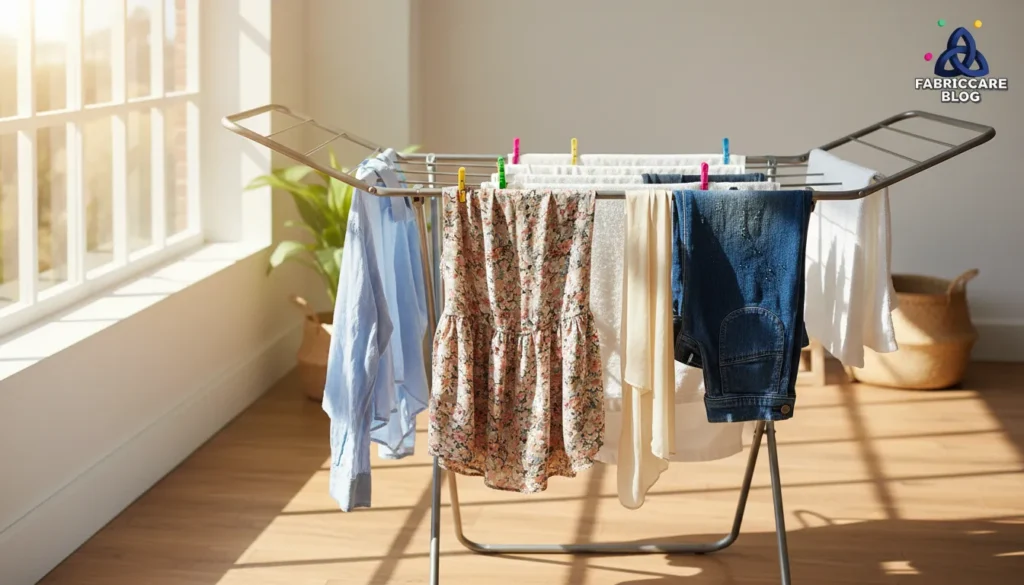
Washing habits also play a major role. Overwashing and washing stained items prematurely add heat, agitation, and chemicals before the stain is controlled. Waiting until the stain has been reduced—and air-drying to check results—prevents many stains from becoming permanent and avoids unnecessary fabric stress.
Storage and wear habits matter as well. Letting garments rest between wears, avoiding sitting or sleeping in delicate items, and changing out of work or outdoor clothes promptly reduce oil, sweat, and friction buildup that later require aggressive treatment.
Fabric-protective habit table
Why this table exists:
This table highlights small habit changes that prevent damage before stain removal is even needed.
| Habit Area | Damaging Choice | Protective Choice |
|---|---|---|
| First response | Immediate scrubbing | Pause and blot |
| Heat use | Dryer to “check” | Air-dry and inspect |
| Washing timing | Wash immediately | Treat, then wash |
| Product use | Multiple products | One method at a time |
| Wear habits | Prolonged wear | Change promptly |
How to use this table:
Replacing just one damaging habit with its protective alternative reduces long-term fabric damage significantly.
The key takeaway is that habits quietly decide fabric lifespan. You don’t need perfect techniques to protect clothes—you need consistent, low-risk habits. When these habits are in place, stain removal becomes calmer, safer, and far more effective, which is the real foundation of how to remove stains without damaging fabric.

12. Building a Safe Stain-Removal Routine You Can Trust
To truly understand how to remove stains without damaging fabric, you need more than isolated tips — you need a routine you can rely on, even when you’re tired, rushed, or unsure what caused the stain. A routine removes guesswork. It replaces emotional reactions with repeatable decisions that protect fabric while still giving stains a fair chance to be removed.
Most damage happens when people improvise. Each stain becomes a new experiment, and experiments are risky when fabric is involved. A safe routine creates boundaries. It defines what you do first, what you never do, and when you stop.
A reliable stain-removal routine always begins with assessment. Before touching the stain, identify the fabric type and assume the stain is high risk until proven otherwise. This mindset alone prevents early heat use, aggressive scrubbing, and product overload — the three most common causes of fabric damage.
The next step is containment, not removal. Blotting excess moisture, scraping solids gently, and keeping heat completely out of the process stabilizes the situation. At this stage, success is not measured by stain disappearance, but by damage avoidance. Once the stain is contained and the fabric is stable, careful treatment becomes possible.
Escalation should always be controlled. One method at a time, minimal product, and full rinsing between attempts protect fibers and dyes. If improvement is visible, a second cautious attempt may be reasonable. If there is no improvement, the routine requires you to stop. This rule protects fabric even when stains cannot be fully removed.
Safe stain-removal routine table
Why this table exists:
This table turns good intentions into a repeatable system you can follow under pressure.
| Routine Step | What to Do | What It Prevents |
|---|---|---|
| Assess | Identify fabric, assume risk | Early mistakes |
| Contain | Blot, scrape, no heat | Stain spreading |
| Treat | One method, minimal product | Chemical overload |
| Evaluate | Check improvement | Over-treatment |
| Stop or proceed | Air-dry, reassess | Permanent damage |
How to use this table:
Follow the steps in order. Skipping a step increases risk without improving results.
The key takeaway is that stain removal should never feel urgent. A calm, consistent routine protects fabric first and removes stains second. When you trust the process, you stop chasing perfection and start preserving the clothes you actually want to keep. This is the practical end point of learning how to remove stains without damaging fabric.