

1. Hand Wash vs. Machine Wash: Understanding the Core Differences
Hand Wash vs Machine Wash is a fundamental decision in fabric care because each method exposes clothes to very different types of stress. Understanding these differences helps you choose the safest and most effective option for each garment, rather than relying on habit or convenience alone.
The most important difference lies in mechanical action. Machine washing cleans clothes through continuous movement, tumbling, and friction. This action is effective for removing everyday dirt and oils, but it also places physical stress on fibers, seams, and surface finishes. Hand washing, by contrast, relies on gentle soaking and light manual movement, which significantly reduces friction and pulling on the fabric.
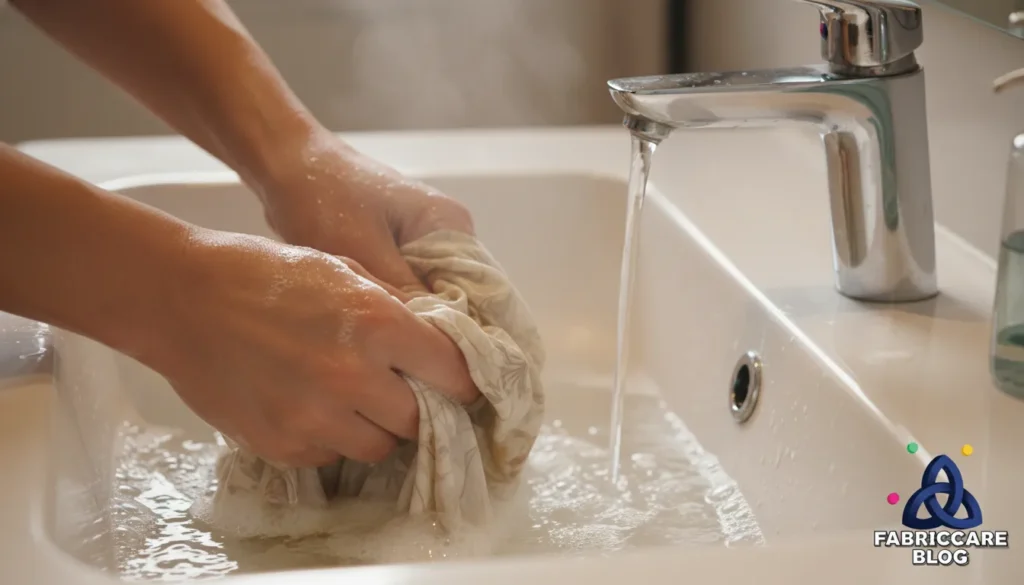
Water control is another key distinction. In machine washing, water level, temperature, and agitation are set by the selected cycle, often optimized for efficiency rather than delicacy. Hand washing allows full control over these factors. You can adjust water temperature precisely, limit movement, and stop the process as soon as the fabric is clean, reducing unnecessary exposure.
Detergent interaction also differs between the two methods. In machine washing, detergent is designed to disperse evenly throughout the load and work alongside mechanical action. In hand washing, detergent is usually diluted more gently, and cleaning depends more on soaking time than force. This makes hand washing better suited for fabrics that react poorly to strong agitation or concentrated detergent contact.
Fabric structure plays a major role in determining which method is safer. Delicate weaves, loose knits, embellished garments, and fabrics with weak fiber bonds are more vulnerable to stretching, snagging, or distortion during machine washing. These items often benefit from hand washing, where movement is minimal and controlled. More durable fabrics, such as tightly woven cottons or sturdy synthetics, are generally designed to tolerate machine washing without damage.
Time and convenience also separate Hand Wash vs Machine Wash in everyday routines. Machine washing is efficient and practical for regular loads, while hand washing requires more time and attention. However, the extra effort of hand washing can prevent fabric damage that would otherwise shorten a garment’s lifespan.
Understanding these core differences helps you see washing methods as tools, not defaults. When you recognize how each method affects fabric at a physical level, Hand Wash vs Machine Wash becomes a thoughtful choice that balances cleanliness, fabric protection, and daily practicality.

2. When Hand Washing Is the Safer Option for Fabrics
Hand washing becomes the safer choice when fabrics are sensitive to friction, stretching, or prolonged mechanical movement. In the context of Hand Wash vs Machine Wash, this method offers greater control and reduces the risk of damage for garments that cannot tolerate aggressive washing conditions.
Delicate fabrics such as silk, wool, lace, and fine knits often benefit from hand washing. These materials have fiber structures that weaken or distort easily when exposed to tumbling and spinning. Even gentle machine cycles can place stress on these fabrics, leading to stretching, pilling, or loss of shape over time.
Garments with embellishments or special finishes are also better suited for hand washing. Items with beads, embroidery, prints, or glued details may loosen, crack, or peel during machine washing. Hand washing minimizes movement and prevents repeated impact against the drum, helping preserve decorative elements and surface treatments.
Hand washing is safer when care labels restrict machine use. Some labels explicitly recommend hand washing only, indicating that the fabric or construction cannot handle mechanical agitation. Ignoring this guidance often results in immediate and irreversible damage, making hand washing the correct choice regardless of convenience.
Another situation where hand washing makes sense is when garments are lightly soiled. In these cases, soaking and gentle movement are usually enough to clean the fabric effectively. Machine washing lightly worn clothes may expose them to unnecessary stress that shortens their lifespan.
Understanding when hand washing is safer helps clarify Hand Wash vs Machine Wash as a practical decision rather than a rigid rule. Choosing hand washing for vulnerable fabrics protects fiber structure, preserves appearance, and reduces long-term wear caused by avoidable mechanical stress.
3. Fabrics That Handle Machine Washing Well
Machine washing is designed for efficiency and consistency, and many fabrics are built to tolerate this process safely. Within Hand Wash vs Machine Wash, understanding which materials handle machine washing well helps prevent unnecessary hand washing while still protecting fabric quality.
Tightly woven cottons are among the most machine-friendly fabrics. Their strong fiber structure and dense weave allow them to withstand regular agitation and spinning without losing shape easily. Everyday items such as T-shirts, sheets, and towels are typically designed for machine washing when proper temperature and cycle settings are used.
Synthetic fabrics, including polyester, nylon, and acrylic, also perform well in machine washing. These fibers are engineered to resist stretching and shrinking, making them suitable for repeated mechanical action. Using appropriate cycles and avoiding excessive heat helps maintain their appearance and texture over time.
Blended fabrics often combine durability with flexibility. Cotton-polyester blends, for example, are commonly designed for machine washing because they balance strength with wrinkle resistance. These fabrics usually tolerate regular cycles better than delicate single-fiber garments, provided care label instructions are followed.
Machine washing is also appropriate for moderately structured garments without fragile details. Clothes without embellishments, loose weaves, or delicate finishes are less likely to snag or distort during tumbling. Turning garments inside out and using appropriate wash cycles further reduces surface wear.
Understanding which fabrics handle machine washing well allows Hand Wash vs Machine Wash to become a practical framework instead of a restrictive rule. Choosing machine washing for suitable fabrics saves time and effort while maintaining fabric integrity through repeated care cycles.
4. How Fabric Structure Influences Washing Method Choice
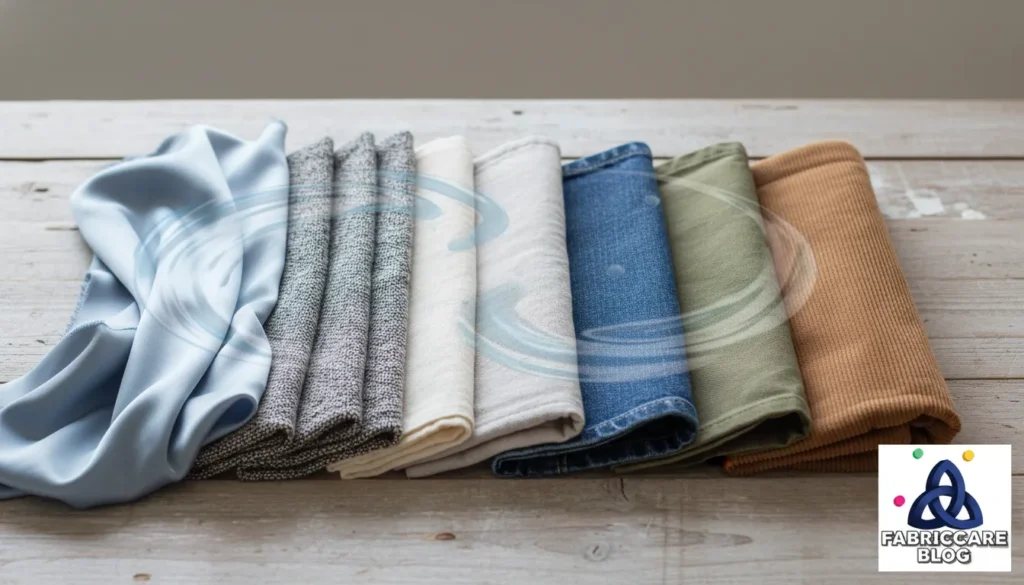
Fabric structure plays a decisive role when choosing between hand washing and machine washing. In the context of Hand Wash vs Machine Wash, the way fibers are woven, knitted, or bonded directly affects how a garment responds to water, movement, and friction.
Woven fabrics generally have a more stable structure. Tightly woven materials, such as denim or plain-weave cotton, hold their shape well under mechanical action. These fabrics distribute stress evenly across the surface, making them more suitable for machine washing when temperature and cycle settings are appropriate.
Knitted fabrics, on the other hand, are more flexible and elastic by nature. This flexibility makes them comfortable to wear but also more vulnerable during washing. Looser knits can stretch, twist, or lose shape when exposed to spinning and agitation. For these fabrics, hand washing or very gentle machine cycles reduce the risk of distortion.
Fabric structure is also influenced by fiber length and bonding. Long, tightly bonded fibers tend to resist pulling and friction better than short or loosely bonded fibers. Fabrics made from shorter fibers may pill or weaken more quickly under machine agitation, making gentler washing methods a safer option.
Surface treatments and finishes further affect washing choices. Fabrics with coatings, softening finishes, or special textures may degrade when exposed to repeated mechanical stress. Hand washing helps preserve these treatments by limiting friction and direct contact with the washing machine drum.
Understanding how fabric structure responds to movement and water helps clarify Hand Wash vs Machine Wash as a fabric-based decision rather than a habit. When washing methods are matched to fabric construction, garments maintain their shape, strength, and appearance for longer periods.
5. Risk of Damage: Agitation, Friction, and Fabric Stress
Agitation and friction are the main sources of fabric damage during washing, which is why they sit at the center of the Hand Wash vs Machine Wash decision. Every time a garment moves against water, other clothes, or the washing machine drum, stress is applied to its fibers.
In machine washing, cleaning relies heavily on agitation. Clothes are lifted, dropped, and rubbed against each other repeatedly. While this motion is effective for removing dirt, it also increases friction at seams, edges, and surface fibers. Over time, this can lead to pilling, thinning fabric, loosened seams, and fading, especially in garments that are not structurally strong.
Hand washing significantly reduces these risks by limiting movement. Instead of continuous tumbling, fabrics are gently soaked and lightly moved through water. This minimizes pulling and abrasion, making hand washing a safer option for items prone to surface damage or stretching. The reduced friction helps preserve fiber strength and garment shape.
Fabric stress also comes from spin cycles. High-speed spinning removes water efficiently but places strong centrifugal force on wet fibers, which are more vulnerable when saturated. Delicate fabrics often suffer the most during spinning, making hand washing—or machine cycles with low or no spin—a better choice.
Load composition matters as well. Mixing heavy items, like towels or jeans, with lighter garments increases friction and impact during machine washing. Even durable fabrics can experience unnecessary wear when paired with heavier pieces. Separating loads or choosing hand washing for delicate items reduces this compounded stress.
Understanding how agitation and friction contribute to fabric damage helps make Hand Wash vs Machine Wash a protective decision rather than a convenience-based one. Choosing the method that limits unnecessary stress extends fabric life and keeps garments looking better through repeated washing.

6. Time, Convenience, and Practical Trade-Offs
Time and convenience are often the deciding factors when choosing between hand washing and machine washing. Within Hand Wash vs Machine Wash, understanding these practical trade-offs helps balance fabric care with realistic daily routines.
Machine washing is clearly more time-efficient. Once clothes are loaded and settings are selected, the process runs automatically, allowing you to focus on other tasks. This makes machine washing the practical choice for regular loads, work clothes, and household items that require frequent cleaning. For busy schedules, the convenience of machine washing often outweighs the added fabric stress for suitable garments.
Hand washing, by contrast, requires active participation. Clothes must be soaked, gently moved, rinsed, and sometimes reshaped by hand. This takes more time and attention, which can feel impractical for large loads or everyday laundry. However, the extra effort can be worthwhile for garments that would otherwise be damaged or degraded in a machine.
Another trade-off is batch size. Machine washing is designed for multiple items at once, making it efficient for families or high-volume laundry. Hand washing is better suited for small quantities, such as a single delicate garment or a few special-care items. Trying to hand wash large loads is rarely practical and increases fatigue without adding benefits.
Drying time can also differ. Hand-washed garments often retain more water if they are not spun, which can extend drying time. Machine washing typically removes more water during the spin cycle, speeding up drying but increasing fabric stress. Choosing between faster turnaround and gentler handling is part of the decision.
Recognizing these trade-offs helps frame Hand Wash vs Machine Wash as a choice between efficiency and protection, not a right-or-wrong rule. By considering time, convenience, and garment value together, you can choose the method that fits both your schedule and your fabric care priorities.
7. Water Temperature Considerations for Each Method
Water temperature influences how fabrics react during washing, making it an important factor in the Hand Wash vs Machine Wash decision. While both methods can use cold, warm, or hot water, the level of control and risk differs between them.
In hand washing, water temperature is easier to manage precisely. This allows you to use cooler water for delicate fabrics that may shrink, fade, or weaken when exposed to heat. Hand washing in lukewarm or cold water is often enough to clean lightly soiled garments while minimizing stress on fibers and dyes.
Machine washing offers preset temperature options that may not always match fabric needs perfectly. Even when a cold or warm setting is selected, temperature fluctuations can occur depending on the machine and water supply. For heat-sensitive fabrics, this lack of precision increases the risk of damage, especially when combined with agitation and spinning.
Temperature also affects cleaning strength. Warmer water helps dissolve oils and remove heavier soil, which can be useful for sturdy fabrics in machine washing. However, using hot water unnecessarily increases the chance of shrinking, color bleeding, and fiber weakening. Hand washing allows you to balance temperature and movement more gently, reducing these risks.
Color retention is another concern. Dark or brightly dyed fabrics are more likely to release color in warm or hot water. Hand washing in cooler water helps preserve color intensity, while machine washing requires careful temperature selection to avoid fading or bleeding.
Understanding how temperature interacts with washing method helps refine Hand Wash vs Machine Wash as a fabric-specific choice. Matching water temperature to both the fabric and the washing method improves cleaning results while protecting garment structure and appearance.

8. Detergent Use in Hand Washing vs. Machine Washing
Detergent behaves differently in hand washing and machine washing, which makes dosage and handling an important part of the Hand Wash vs Machine Wash decision. Using the same approach for both methods can lead to residue, fabric stress, or ineffective cleaning.
In hand washing, detergent is usually diluted in a basin or sink before clothes are added. This creates a gentler cleaning environment, where detergent works through soaking rather than force. Because there is less water movement, using a small amount of mild detergent is usually sufficient. Excess detergent in hand washing is difficult to rinse out and can cling to fibers, especially in delicate fabrics.
Machine washing relies on precise detergent distribution and mechanical action. Detergents used in machines are formulated to disperse evenly throughout the load and work alongside agitation. Using too much detergent in a machine, especially a high-efficiency model, increases the risk of residue and poor rinsing. Measuring detergent carefully is essential to maintain both fabric comfort and machine performance.
Detergent strength also matters. Delicate fabrics washed by hand benefit from gentle or specialty detergents designed to protect fiber structure. Standard detergents may be too harsh when combined with prolonged soaking. In machine washing, standard or high-efficiency detergents are usually appropriate for durable fabrics, provided dosage and cycle selection are correct.
Rinsing differences further separate the two methods. Machine washing includes automated rinse cycles that remove detergent efficiently when dosage is correct. Hand washing requires manual rinsing, which makes it easier to under-rinse or over-handle fabrics. Using less detergent simplifies rinsing and reduces the need for repeated water changes.
Understanding how detergent works in each method helps make Hand Wash vs Machine Wash a cleaner and safer choice. Matching detergent type and amount to the washing method improves rinsing, protects fibers, and prevents unnecessary residue buildup over time.
9. Common Mistakes When Choosing the Washing Method
Many fabric issues happen not because clothes are washed incorrectly, but because the wrong washing method is chosen. In the context of Hand Wash vs Machine Wash, these mistakes often come from habit, assumptions, or convenience rather than fabric needs.
One common mistake is defaulting to machine washing for everything. While machines are efficient, not all fabrics are built to handle continuous agitation and spinning. Delicate garments, loosely knitted items, and clothes with embellishments often suffer unnecessary damage when machine washed simply because it is faster.
Another frequent error is overusing hand washing when it is not needed. Hand washing durable fabrics that are designed for machine cycles adds extra time and effort without real benefit. In some cases, improper hand washing—such as wringing or excessive rubbing—can cause more damage than a gentle machine cycle.
Ignoring care labels is another major issue. Labels often specify whether hand washing or machine washing is recommended, yet they are commonly overlooked. Choosing a washing method that contradicts label guidance increases the risk of shrinking, fading, or structural damage.
Load composition also causes mistakes. Mixing delicate garments with heavy items in a machine wash increases friction and impact, even if the cycle is gentle. In these situations, separating items or choosing hand washing for vulnerable pieces is safer.
Understanding these common mistakes helps Hand Wash vs Machine Wash become a deliberate choice rather than an automatic one. Paying attention to fabric type, garment construction, and care labels reduces unnecessary wear and helps clothes last longer.

10. How Care Labels Guide Hand or Machine Washing
Care labels are the most reliable reference when deciding between hand washing and machine washing. Within Hand Wash vs Machine Wash, these labels translate fabric testing into clear limits that help prevent damage caused by the wrong washing method.
When a label specifies hand wash only, it indicates that the fabric or garment construction cannot tolerate mechanical agitation. This may be due to delicate fibers, loose weaves, surface finishes, or weak seams. Ignoring this instruction and machine washing such items often results in stretching, distortion, or surface damage that cannot be reversed.
Labels that allow machine washing usually include additional details that refine the choice. Cycle type, water temperature, and spin speed all influence how aggressive the wash will be. Even when machine washing is permitted, selecting a gentler cycle may still be appropriate for certain fabrics within the same category.
Some labels offer both options, indicating that either hand washing or machine washing is acceptable under specific conditions. In these cases, the choice often depends on garment value, frequency of wear, and how much wear you are willing to accept over time. Hand washing may extend longevity, while machine washing offers convenience.
Care labels also help identify risk thresholds. If a label allows machine washing but restricts temperature or spin, it signals that mechanical action is tolerated only within limits. Respecting these limits reduces cumulative damage and helps fabrics maintain their original shape and texture.
Understanding how to read and apply care label guidance makes Hand Wash vs Machine Wash a safe and informed decision. Labels act as a built-in safety system, helping you choose the washing method that balances cleanliness, protection, and practicality for each garment.
11. Balancing Fabric Longevity and Daily Laundry Needs
Balancing fabric longevity with daily laundry needs is the core challenge behind the Hand Wash vs Machine Wash decision. While protecting garments is important, laundry routines must also remain practical and sustainable in everyday life.
From a longevity perspective, hand washing is generally gentler. Reduced agitation, controlled temperature, and minimal spinning help preserve fiber strength, shape, and surface appearance. Over time, this can significantly extend the life of delicate or high-quality garments. However, applying hand washing to every item is rarely realistic for most households.
Machine washing supports consistency and efficiency, which are essential for daily routines. Clothes that are worn frequently need regular cleaning, and machine washing makes this manageable. For fabrics designed to tolerate mechanical action, the convenience of machine washing does not necessarily compromise longevity when correct cycles, temperatures, and detergent amounts are used.
The key is selective care. High-use, durable items can be machine washed regularly with minimal impact, while low-use or high-value garments benefit from gentler handling. This selective approach prevents unnecessary hand washing without exposing vulnerable fabrics to repeated stress.
Frequency also matters. Washing clothes more often than necessary increases wear regardless of method. Allowing lightly worn garments to air out between uses can reduce washing frequency, supporting fabric longevity while keeping routines manageable.
By viewing Hand Wash vs Machine Wash as a balance rather than a strict rule, you can protect important garments without overcomplicating daily laundry. Matching washing method to fabric value, usage frequency, and lifestyle needs creates a sustainable system that keeps clothes wearable for longer.

12. Building a Simple Decision Routine for Washing Methods
Creating a simple decision routine helps remove doubt from the Hand Wash vs Machine Wash choice and makes laundry care easier to manage over time. Instead of reconsidering every garment from scratch, a routine provides a clear sequence of checks that lead to consistent decisions.
The first step in the routine is checking the care label. Labels set the non-negotiable limits for washing methods. If hand washing is required, the decision is already made. If machine washing is allowed, you can move to the next consideration without risk.
Next, consider fabric type and structure. Delicate fabrics, loose knits, and garments with embellishments should default to hand washing or the gentlest available option. Durable, tightly woven fabrics can safely move toward machine washing when label guidance permits.
The third step is garment value and frequency of use. High-value or rarely worn items often deserve extra care, even if machine washing is allowed. Everyday clothing designed for frequent use can usually be machine washed without concern when proper settings are chosen.
Finally, factor in time and load composition. If a garment can safely join a compatible machine load, machine washing is often the practical choice. If it requires separation or special handling, hand washing may be more efficient overall.
By following this simple sequence—label, fabric, value, and practicality—Hand Wash vs Machine Wash becomes a predictable decision rather than a judgment call. This routine protects fabrics, supports daily efficiency, and helps maintain consistent laundry habits over the long term.