

1. How Much Detergent Should You Use: Why Amount Matters
How Much Detergent Should You Use is a common question because detergent amount has a direct impact on cleaning results, fabric condition, and washing efficiency. Many laundry problems are not caused by the washing machine or detergent type, but by using the wrong quantity for the load.
Using the correct amount of detergent helps remove dirt effectively while allowing proper rinsing. Detergent works by surrounding and lifting soil from fabric fibers so it can be carried away by water. When the amount is balanced, this process happens smoothly and clothes come out clean without residue.
Using too much detergent often creates more problems than it solves. Excess detergent produces more suds than the machine can rinse away, especially in modern low-water washers. This leftover residue can make fabrics feel stiff, attract new dirt, and trap odors inside fibers. Over time, it may also build up inside the washing machine, reducing performance.

On the other hand, using too little detergent can prevent proper soil removal. When detergent is insufficient, dirt and oils may not fully lift from fabric fibers. Clothes may come out looking clean at first but develop dullness or odors after repeated wear. This often leads to rewashing, which increases fabric wear and water use.
Detergent amount also affects fabric longevity. Balanced use reduces friction caused by excess suds and prevents repeated washing caused by under-cleaning. Both overuse and underuse increase stress on fabrics over time, shortening garment lifespan.
Another important factor is washing efficiency. Correct detergent amounts support better rinsing, lower water usage, and more consistent results. When detergent is measured properly, laundry routines become more predictable and easier to manage.
Understanding why amount matters helps How Much Detergent Should You Use become a practical decision rather than guesswork. Measuring detergent based on load size, soil level, and machine type sets the foundation for cleaner clothes, healthier fabrics, and more efficient laundry habits.

2. What Happens When You Use Too Much Detergent
Using more detergent than necessary is a common mistake, and understanding its effects is essential to answering How Much Detergent Should You Use correctly. While it may seem logical that more detergent equals cleaner clothes, the opposite often happens.
When too much detergent is added, the washing machine may struggle to rinse it away completely. Excess suds reduce the mechanical action needed to move clothes freely during the wash cycle. This limits soil removal and leaves detergent trapped in fabric fibers, especially in modern high-efficiency machines that use less water.
Residue buildup is one of the most noticeable consequences. Detergent left behind in fabrics can make clothes feel stiff or sticky and may cause colors to appear dull over time. Residue also attracts dirt more easily, meaning clothes can become dirty faster after washing, even if they looked clean at first.
Excess detergent can also trap odors instead of removing them. Oils and bacteria may remain embedded in fabric fibers when detergent does not rinse properly. This often leads to recurring smells that reappear shortly after wearing the garment, creating a cycle of rewashing and further buildup.
Washing machine performance is affected as well. Over time, leftover detergent can accumulate inside hoses, drums, and seals. This buildup may reduce efficiency, contribute to unpleasant smells in the machine, and increase maintenance needs.
Using too much detergent also increases fabric wear. Extra suds create more friction during washing, stressing fibers unnecessarily. Combined with repeated rewashing, this shortens garment lifespan.
Recognizing what happens when detergent is overused helps reinforce How Much Detergent Should You Use as a practical guideline. Measuring detergent accurately protects fabrics, improves rinsing, and supports cleaner, more consistent laundry results.
3. Problems Caused by Using Too Little Detergent
Using too little detergent can be just as problematic as using too much, which is why it matters when deciding How Much Detergent Should You Use. While reducing detergent may seem like a safer or more economical choice, insufficient amounts often lead to poor cleaning and repeated washing.
When detergent levels are too low, it becomes harder for the wash to lift and suspend dirt and oils from fabric fibers. Instead of being carried away by water, soil may remain embedded in the fabric. Clothes can appear clean at first glance but quickly develop odors or feel uncomfortable after wearing.
Underusing detergent often results in uneven cleaning. Heavily soiled areas, such as collars, cuffs, or underarms, may not be cleaned properly, while other parts of the garment receive minimal benefit. This can create the impression that certain fabrics or washing machines are ineffective, when the issue is actually detergent amount.
Another problem is the need for rewashing. When clothes are not cleaned thoroughly the first time, people often rewash them using the same low detergent amount or increase temperature instead. Rewashing increases water use, energy consumption, and fabric wear, which defeats the purpose of using less detergent in the first place.
Too little detergent can also allow odor-causing bacteria to remain in fabrics. Without enough cleaning agents to break down oils and residues, bacteria may survive the wash and multiply, leading to recurring smells even after laundering.
Understanding the problems caused by underusing detergent helps clarify How Much Detergent Should You Use in everyday practice. Using enough detergent to clean effectively—without excess—supports better results, reduces rewashing, and helps clothes stay fresh and comfortable over time.

4. How Load Size Affects Detergent Amount
Load size is one of the most important factors when deciding How Much Detergent Should You Use, yet it is often misjudged. Using the same detergent amount for every load ignores how water, movement, and fabric volume interact during washing.
When a load is too large, detergent has to work harder to reach all fabric surfaces. If detergent amount is not adjusted, dirt and oils may not be lifted evenly, leading to uneven cleaning. Overloading also limits water circulation, which reduces rinsing efficiency and increases the chance of residue remaining in fabrics.
For small loads, using the same detergent amount as a full load often results in excess suds. With fewer clothes to absorb and distribute detergent, residue becomes more likely. This can make fabrics feel stiff and attract dirt faster after washing.
Medium or regular loads usually require standard detergent amounts, as indicated on detergent packaging. These amounts are designed to balance cleaning power and rinsing when clothes have enough space to move freely inside the drum.
Accurately judging load size means looking at volume, not weight. Bulky items like towels or hoodies take up more space and may require more detergent than lighter garments, even if the load feels similar in weight. Leaving enough space in the drum for clothes to move helps detergent work effectively.
Adjusting detergent based on load size supports How Much Detergent Should You Use by improving cleaning consistency and reducing residue. When detergent amount matches load size, clothes rinse better, washing results improve, and fabric wear is minimized over time.
5. Detergent Amount for Light, Regular, and Heavy Soil
Soil level plays a major role in determining How Much Detergent Should You Use, because not all laundry loads are equally dirty. Adjusting detergent amount based on how soiled clothes are helps achieve better cleaning without causing residue or unnecessary fabric wear.
Light soil includes clothes that have been worn briefly or show minimal dirt, such as lightly used tops or garments worn indoors. These items usually require less detergent than the standard recommendation. Using a reduced amount helps prevent residue buildup while still cleaning effectively.
Regular soil refers to everyday clothing with normal exposure to sweat, oils, and environmental dirt. For these loads, the standard detergent amount indicated on the product label is typically sufficient. This balance allows detergent to lift soil properly while rinsing cleanly during the wash cycle.
Heavy soil includes items like work clothes, sportswear, or garments with visible stains and odors. These loads may require a slightly increased detergent amount, but moderation remains important. Increasing detergent too much often leads to residue and poor rinsing rather than better cleaning. In many cases, pre-treating stains or using appropriate wash cycles is more effective than adding extra detergent.
It is also important to consider how soil level interacts with water temperature and cycle selection. Heavily soiled items may benefit from longer cycles or warmer water, depending on fabric tolerance. Adjusting these factors alongside detergent amount often produces better results than focusing on detergent alone.
Matching detergent amount to soil level supports How Much Detergent Should You Use by creating a flexible approach to laundry. This method improves cleaning efficiency, reduces rewashing, and helps protect fabrics from unnecessary stress over time.
6. Liquid, Powder, and Pods: Does Amount Change
Detergent format directly influences How Much Detergent Should You Use, because liquid, powder, and pod detergents behave differently during washing. Using the same approach for all formats often leads to overuse or underuse.
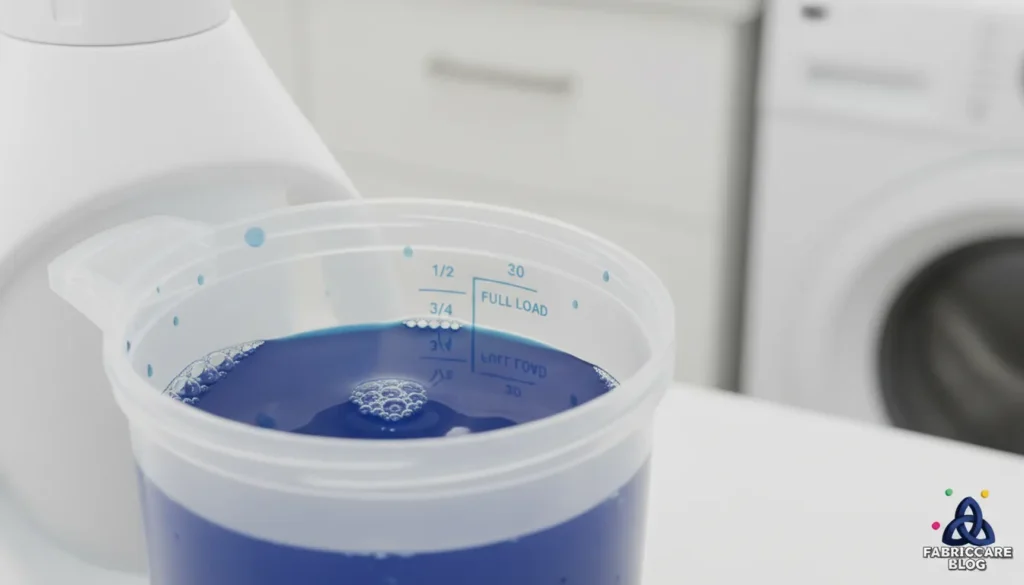
Liquid detergents are easy to adjust but also easy to overuse. Because they pour quickly, people often exceed the needed amount. For most regular loads, using less than the maximum line on the cap is sufficient. Liquid detergent spreads easily through water, so smaller amounts often clean just as effectively.
Powder detergents require careful measuring. Too much powder can leave visible residue, especially in cold water or overloaded machines. Too little may not dissolve or clean properly. Powder works best when matched to appropriate water temperature and evenly distributed in the drum or detergent drawer.
Detergent pods and capsules simplify measuring because each pod contains a pre-measured dose. One pod is usually enough for a standard load. Using more than one pod for regular laundry often leads to excess detergent and poor rinsing. Pods are less flexible for adjusting to small or lightly soiled loads.
Machine type also matters. High-efficiency machines use less water, so all detergent formats require smaller amounts than traditional machines. Using full doses in these machines increases the risk of residue and buildup.
Understanding how detergent format affects dosage helps clarify How Much Detergent Should You Use in everyday practice. Adjusting amount based on detergent type improves rinsing, protects fabrics, and leads to more consistent washing results.
7. How Water Hardness Impacts Detergent Use
Water hardness has a direct influence on How Much Detergent Should You Use because minerals in the water affect how detergent dissolves and cleans. Hard water contains higher levels of minerals like calcium and magnesium, which interact with detergent and reduce its effectiveness.
In hard water, detergent molecules bind with minerals instead of fully attaching to dirt and oils. This reduces cleaning power and may leave residue on fabrics, making clothes feel stiff or look dull over time. To compensate, some people add more detergent, but this often worsens buildup rather than solving the problem.
Using the correct detergent formulation can make a difference. Some detergents are designed to perform better in hard water by including ingredients that help soften water during washing. When these detergents are used, increasing the amount is often unnecessary.
In soft water, detergent dissolves and activates more easily. Because there are fewer minerals interfering with cleaning, less detergent is usually required. Using standard amounts in soft water can quickly lead to excess suds and residue, especially in high-efficiency machines.
Water hardness also affects rinsing. In hard water areas, residue may cling more easily to fabric fibers, while in soft water, detergent may foam more than expected. Adjusting detergent amount slightly based on local water conditions helps improve overall results.
Understanding water hardness helps refine How Much Detergent Should You Use without relying on guesswork. Small adjustments based on water quality improve cleaning efficiency, protect fabrics, and reduce unnecessary detergent buildup over time.

8. Detergent Amount in High-Efficiency Washing Machines
High-efficiency washing machines require special attention when deciding How Much Detergent Should You Use, because they operate with significantly less water than traditional models. These machines rely on precise detergent action rather than heavy dilution to clean clothes effectively.
High-efficiency machines are designed to work with low-sudsing detergents. Using too much detergent in these machines quickly creates excess foam that cannot be rinsed away properly. This often leads to residue on fabrics, unpleasant odors inside the machine, and reduced cleaning performance over time.
Because less water is used, detergent becomes more concentrated during the wash cycle. Even small increases in detergent amount can have a large impact. For most loads, using less than the maximum recommended amount on the detergent label is sufficient. In many cases, half the suggested dose cleans effectively.
Another factor is load sensing technology. Many high-efficiency machines adjust water levels automatically based on load size. Adding too much detergent can interfere with this balance, reducing agitation and limiting soil removal rather than improving it.
High-efficiency machines also benefit from proper rinsing habits. When detergent is measured correctly, clothes rinse more cleanly, reducing stiffness and skin irritation. This also helps keep the machine cleaner, lowering the risk of buildup inside seals and drums.
Understanding how detergent behaves in high-efficiency machines reinforces How Much Detergent Should You Use as a precision-based decision. Careful measuring improves washing results, protects fabrics, and helps these machines operate as intended over the long term.
9. Reading Detergent Labels Without Guessing
Reading detergent labels correctly is a key step in understanding How Much Detergent Should You Use, yet many people overlook the information provided on packaging. Detergent labels are designed to guide dosage, but they require careful attention to avoid common misunderstandings.
Most detergent labels present recommended amounts based on load size and soil level. These guidelines often assume average conditions, so they should be treated as a starting point rather than a fixed rule. Understanding which line or marking applies to your load helps prevent overuse.
Another important detail is concentration. Some detergents are highly concentrated and require much smaller amounts than older formulas. Failing to notice concentration indicators often leads to using too much detergent, even when following the label visually.
Machine type also matters. Labels frequently include separate guidance for high-efficiency machines, which typically require less detergent. Ignoring these distinctions can result in excess suds, poor rinsing, and residue buildup.
Detergent labels may also include symbols or notes related to water hardness or specific washing conditions. While these details are easy to miss, they help fine-tune detergent use for better results. Taking a moment to review these instructions improves consistency and reduces trial-and-error.
Learning to read detergent labels without guessing helps How Much Detergent Should You Use become a clear, repeatable process. When label guidance is combined with observation and small adjustments, laundry routines become more efficient, reliable, and fabric-friendly.

10. Common Measuring Mistakes People Make
Measuring errors are one of the main reasons people struggle with How Much Detergent Should You Use. These mistakes often happen out of habit and can quietly reduce washing quality over time.
One common mistake is using the detergent cap incorrectly. Many caps show multiple measurement lines, but people often fill them to the top instead of using the line that matches load size. This usually results in using far more detergent than necessary, especially with concentrated formulas.
Another frequent issue is estimating instead of measuring. Pouring detergent “by eye” may feel convenient, but it leads to inconsistent results. Small variations add up over time, causing residue buildup in fabrics and inside the washing machine. Consistent measuring helps stabilize washing outcomes.
Ignoring load size changes is also a problem. Using the same detergent amount for small, medium, and large loads does not account for differences in fabric volume and water use. This often causes excess detergent in small loads and under-cleaning in large ones.
Some people mistakenly adjust detergent instead of addressing other factors. For example, adding more detergent to deal with odors or stains may mask the real issue, such as overloading, low water temperature, or incorrect cycle selection. Detergent amount should work alongside these settings, not replace them.
Understanding these measuring mistakes helps refine How Much Detergent Should You Use into a reliable habit. Accurate measuring reduces residue, improves cleaning consistency, and protects both fabrics and washing machines over time.
11. How to Adjust Detergent Use Over Time
Adjusting detergent use over time is an important step in mastering How Much Detergent Should You Use, because laundry conditions are not always the same. Fabrics age, washing machines change performance, and household routines evolve, all of which can affect how much detergent is truly needed.
One of the most reliable ways to adjust detergent use is by observing results after washing. Clothes that come out clean, soft, and free of residue indicate that detergent amount is well balanced. If fabrics feel stiff, sticky, or develop odors quickly, it may be a sign that detergent use needs to be reduced or rinsing improved.
Fabric changes also matter. As garments age, fibers may become more absorbent or delicate. In these cases, slightly reducing detergent amount can help protect fabric integrity while still achieving adequate cleaning. Newer fabrics, on the other hand, may release finishes or dyes early on, which can temporarily affect washing behavior.
Seasonal habits can influence detergent needs as well. Heavier clothing worn in colder months may carry more soil and require small adjustments in detergent amount. Lighter loads during warmer months often need less detergent, especially when washed more frequently.
Washing machine condition plays a role over time. Machines that are kept clean and free of buildup usually require less detergent to perform well. If a machine begins to hold odors or leave residue, it may indicate that detergent amounts should be reduced rather than increased.
Learning how to make gradual adjustments helps How Much Detergent Should You Use become a flexible guideline instead of a fixed rule. Small, thoughtful changes improve washing consistency, protect fabrics, and support long-term laundry efficiency.

12. Building a Consistent Routine for Measuring Detergent
Building a consistent routine is the final step in applying How Much Detergent Should You Use with confidence. A routine removes guesswork and helps ensure detergent is measured accurately every time, regardless of load type or schedule changes.
The first step is choosing one measuring method and sticking to it. Whether you use the detergent cap, a scoop, or a separate measuring cup, consistency matters more than the tool itself. Using the same method each time makes it easier to notice when adjustments are needed.
Next, it helps to define a default amount for regular loads. This becomes your baseline. From there, you can make small adjustments for larger loads, heavier soil, or specific fabrics. Having a clear starting point prevents overcorrection and unnecessary detergent use.
Organizing detergent supplies also supports consistency. Keeping detergents clearly labeled and stored in the same place reduces mistakes, especially in busy routines. When measuring tools are easy to reach, people are less likely to estimate instead of measure.
Routine also involves periodic checks. Every few weeks, pay attention to how clothes feel and smell after washing. If results remain consistent, the routine is working. If residue, stiffness, or odors appear, small adjustments can be made without changing the entire system.
By building a simple, repeatable measuring routine, How Much Detergent Should You Use becomes an automatic habit rather than a repeated decision. This approach improves washing results, protects fabrics, and supports efficient laundry care over the long term.